

How to Create Opt-in Forms for WordPress
If you want more email subscribers, your form has to convert visitors into leads. And frequent conversions demand low friction and high trust. A well-built opt-in form reduces effort, clearly communicates value, and reassures users before they hit submit.
With Fluent Forms, you can create conversion-focused opt-in forms. From a simple email capture to a fully styled, brand-aligned form, everything can be built visually and deployed to pages and posts.
In this guide, I’ll show you how to create opt-in forms for WordPress step by step, plus how to customize the design with the Advanced Form Styler and make the form more useful with features like data validation and landing pages.
TL;DR
- An opt-in form collects a visitor’s email address, usually in exchange for something useful, like a newsletter, lead magnet, or update.
- You can build one in Fluent Forms with just a few fields, and change the appearance using the Advanced Form Styler
- Applying a simple CSS to make the form get contained inside a custom button and then appear once clicked
- If you want more control, you can still tweak the CSS and use advanced features like validation and landing pages.
- Take the Forms short code and place any page you want to show the forms, and publish the page.
- Also publish the form as a standalone landing page to remove distractions and focus visitors on a single action.
What an Opt-in Form Is and Why It Matters
An opt-in form is a simple form that asks a visitor for permission to join a user’s email list. In most cases, the form collects a name and email address, then sends the user into your newsletter, lead nurture flow, or freebie delivery sequence.
A strong opt-in form helps you grow your subscriber list, capture leads before they leave your site, send newsletters and promotions, and deliver lead magnets, coupons, or free resources. A well-built opt-in form builds a direct line to your audience without relying on social platforms.
That means getting the fields, styling, and placement right from the start.
Steps to Create Opt-in Forms on WordPress
The easiest way to build an opt-in form in WordPress is to use Fluent Forms, the fastest WordPress contact form builder, and keep the process lean. You do not need a developer, nor a complicated setup.
Build a form with Fluent Forms
You can easily build an opt-in form with Fluent Forms and embed it on a new or existing page, while applying the Advanced Form Styler or the Gutenberg block.
Start with the smallest version that still does the job. For most opt-in forms, a first name field, an email address field, and an optional consent checkbox are enough.
To build a form using Fluent Forms, you need to go to the Fluent Forms dashboard, then click on Add New Form, and then directly go to the Fluent Forms editor page.
All you have to do is:
- Add the required input fields, and
- Customize the fields
Fluent Forms’s drag-and-drop editor lets you add and customize fields without writing a single line of code.
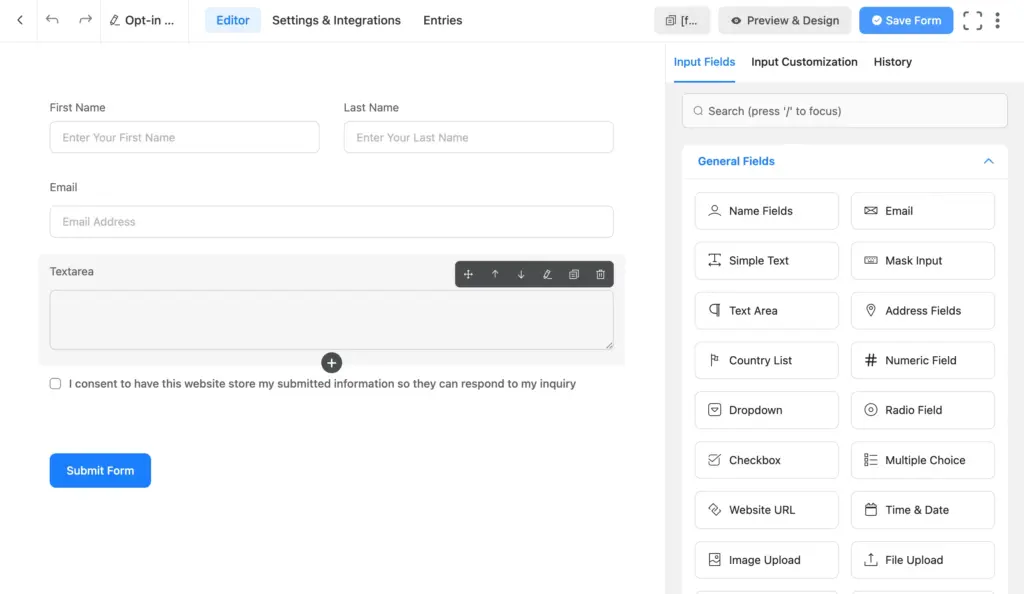
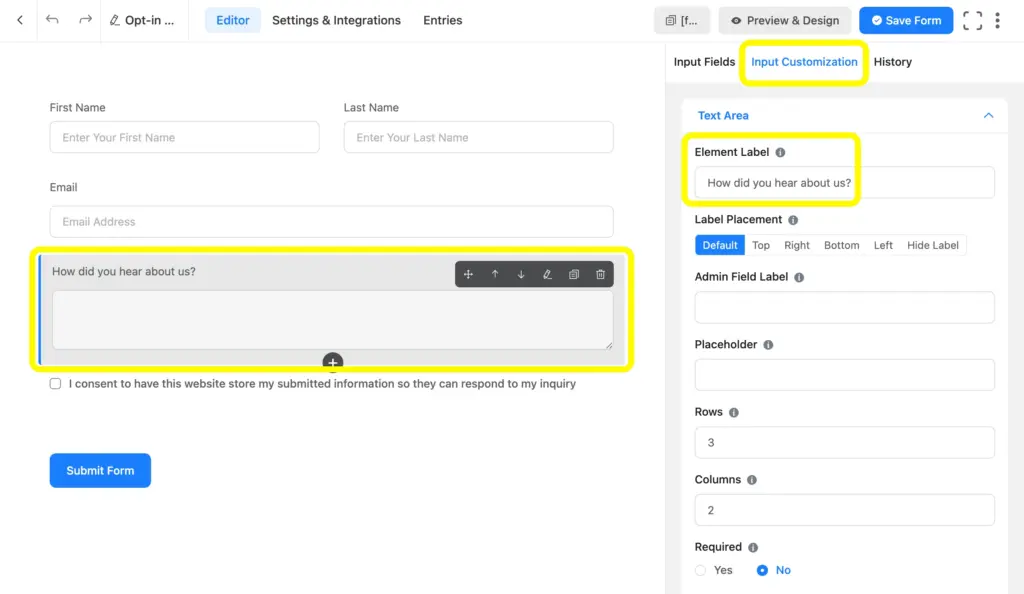
To customize the field, simply click the field and change the placeholder, label, etc.
Apply the Advanced Form Styler
Here is where the form stops looking generic.
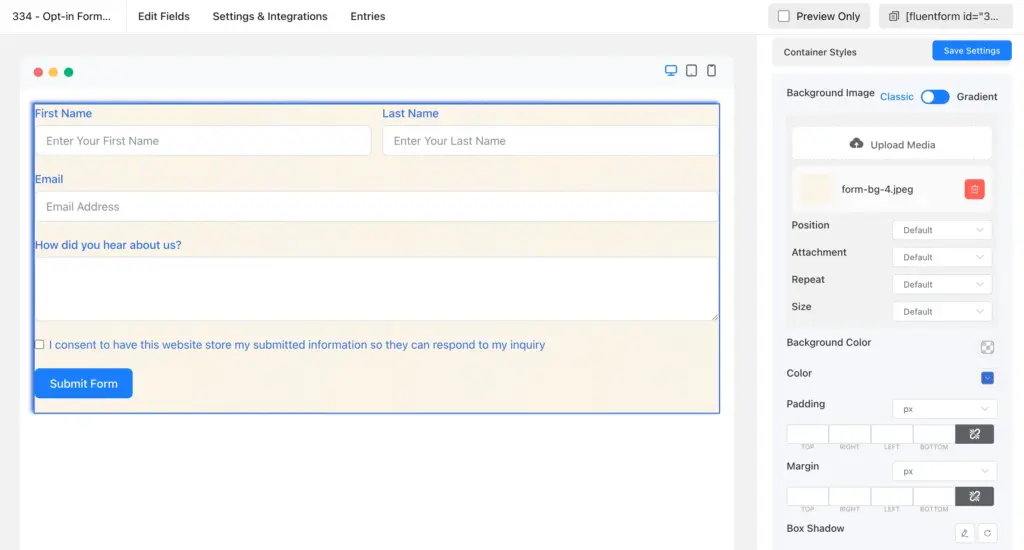
Fluent Forms Advanced Form Styler comes with multiple customization options, showing you the outcome in real-time.
In the preview page, you can find the built-in Advanced Form Styler, which enhances the way you build a form and amplifies your branding style throughout every inch of the form you are designing.
With the styler, you can adjust field spacing, label color, input borders, button styles, background color, typography, form width, and error or success states. That means you can match the form to your site’s design without needing a developer.
Bring the form to the respective page
Once the form is ready, the next step is to place it where people can actually see it.
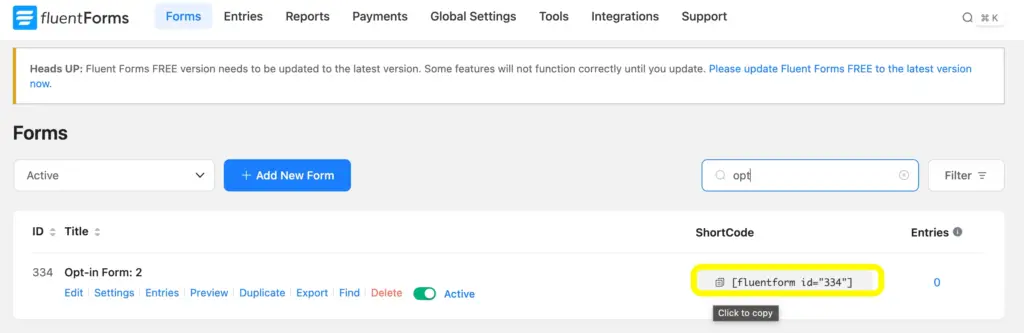
You can find the shortcode of a form from the list of Forms and copy it with a single click.
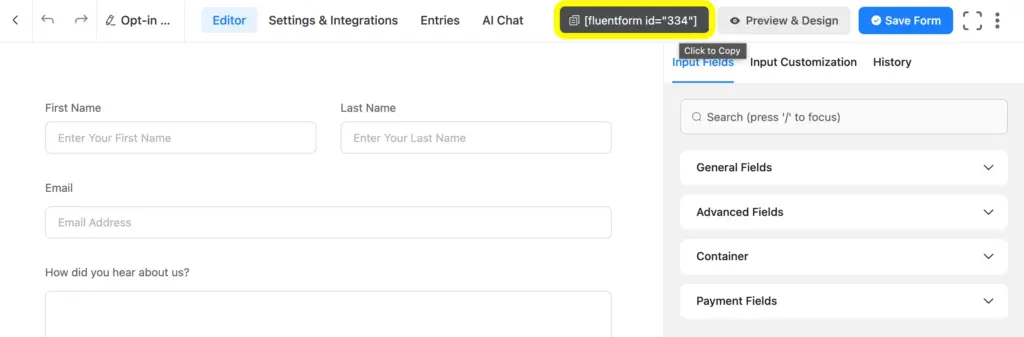
You can also find the shortcode icon in the top-right corner of the editor page.
Copy it and paste it into the page, post, sidebar, footer, landing page, or block area where you want it to appear.
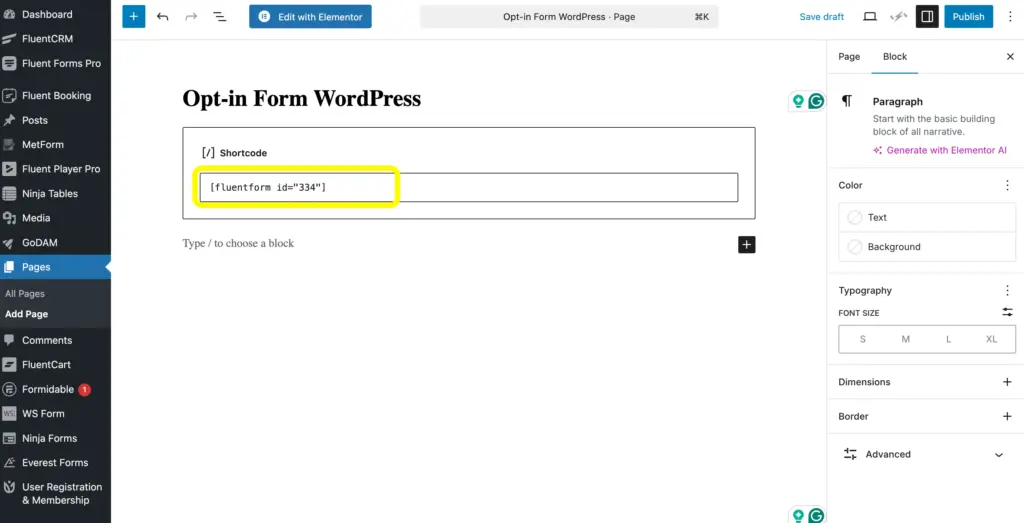
[fluentform_modal_form_id=”334″]
Customize the shortcode
If you want a bit more control, you can customize how the shortcode is used on the page.
Customizing the shortcode will change how the form primarily appears before the users, without changing anything inside it. For example, a form placed after a technical article usually performs differently from one placed into a random page section.
You can change the place as well as the button for experimenting.
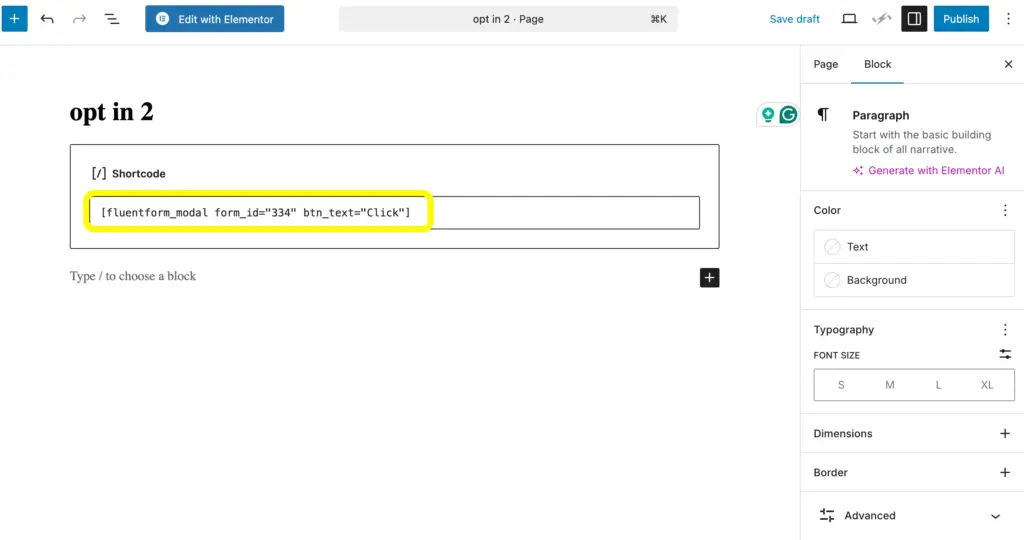
This shortcode displays a button on the page. When a visitor clicks it, the full form opens in a modal. And then, when a user clicks on it, they can see the whole form, which makes the user decide quickly whether they want to fill it out, not just see a form standing anywhere.

Design Your Form in Gutenberg Block
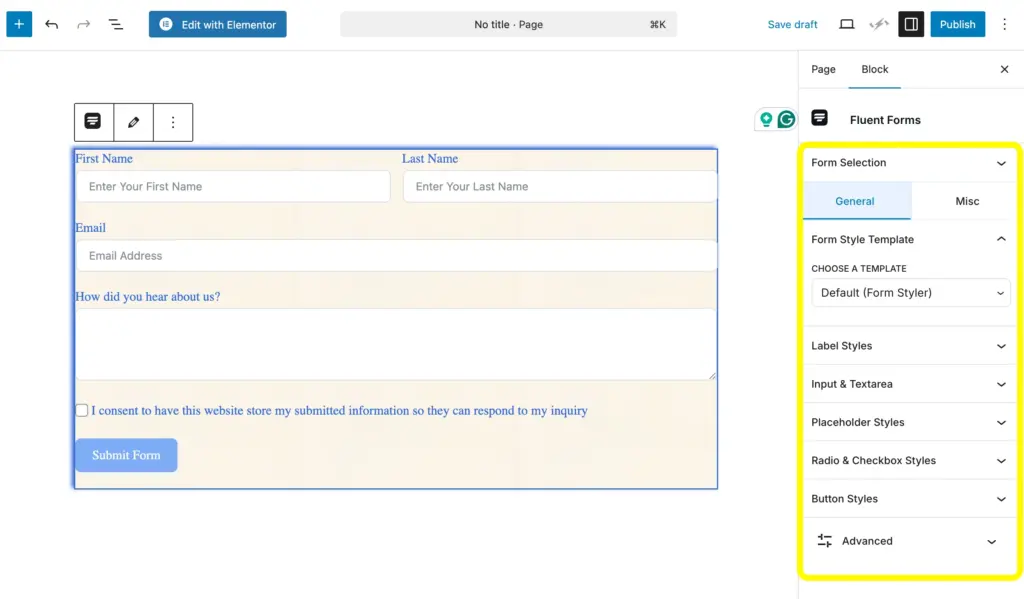
While adding your form to a page in the block editor, you can now easily design your form in a Gutenberg Block.
After adding the Fluent Forms block, choose the form position on the page. Then, you will find the styler on the right side of the page, using which you can design the form with more freedom.
Fluent Forms Features That Make Your Opt-in Form Work Harder
If your opt-in form starts doing real work for you, these Fluent Forms features can help you scale it without rebuilding everything from scratch.
Advanced Data Validation
Advanced data validation helps you control what kind of input reaches your form. This is useful when you want cleaner leads and fewer junk entries. Cleaner entries also mean your CRM contacts and automations run on accurate data.. You can use validation to make sure emails are valid, enforce required formatting, reduce broken or fake submissions, and keep your lead data cleaner from the start.
Landing Page Module
The Landing Page module removes your site’s navigation and sidebars so visitors focus only on the form. Instead of placing the form on a page with extra navigation, banners, and side content, you can build a focused page that keeps people on task.
It works well for:
- Lead magnets and free downloads
- Event registrations
- Email list signup offers
Enjoying this article?
We regularly publish actionable content on our blog. Subscribe to get them delivered straight to your inbox.
We won’t spam you. You can unsubscribe whenever you want.

Hi, this is Aparup. I am a Literature postgraduate, mixing my creative thoughts with my experience in the tech industry to surpass AI. Professionally, I am a content marketer seeking solutions to users’ problems regarding WordPress.



Leave a Reply