
9 Best Typeform Alternatives in WordPress for 2026 (Free & Paid)
Typeform is one of the most recognized names in the online form-building world. It redefined what forms could look like – engaging, conversational, and human. For many users, Typeform is where form design got personal. With its stunning UI, one-question-at-a-time approach, and deep integrations, it’s easy to see why it became the go-to for surveys, quizzes, and feedback forms.
But even great tools have limits. As your needs grow, Typeform’s pricing, branding restrictions, and response limits can start to feel restrictive. That’s why many users, including myself, began looking for alternatives that deliver the same interactive experience without the recurring cost.
I’ve tested and compared several WordPress-based options that not only match Typeform’s conversational feel but also provide more control, ownership, and freedom. If you’re planning to switch or just exploring your options, this guide will help.
Here’s my take.
TL;DR
- Typeform is modern, beautiful, and highly interactive – but it can get expensive as you scale.
- Most WordPress form builders now offer conversational forms, advanced logic, and automation for a fraction of the cost.
- Fluent Forms leads the pack with its free conversational form feature, deep integrations, and strong lifetime value.
- QuillForms brings a near-identical Typeform-style interface natively into WordPress.
- Forminator and Formidable Forms excel at interactivity and calculations.
- Gravity Forms and WS Form provide developer-level flexibility for advanced use cases.
- Ninja Forms and Bit Form keep things simple and affordable for small businesses.
SaaS vs WordPress
Before comparing the tools, let’s talk about the environment difference. Many of the alternatives here are WordPress-based, which gives you a different kind of control and cost structure than a SaaS tool like Typeform. Understanding this difference will help you make a smarter, long-term decision.
Why people choose SaaS products
SaaS platforms like Typeform make form creation effortless. You sign up, pick a template, and start collecting responses within minutes. No installation, no maintenance, and no hosting worries. Everything is handled by the provider – hosting, backups, and updates. You can access your forms from anywhere, which is perfect for teams that prioritize convenience and remote accessibility.
Why people choose WordPress plugins
WordPress form builders take a different approach. They live on your website, giving you complete control over data, styling, and integrations. Your form data stays on your own server, not on a third-party system. That means better privacy, full ownership, and no per-response fees.
In the long run, this setup is far more cost-effective. Instead of paying monthly for response amounts and other features, you buy a plugin once a year (or choose a lifetime plan) and use it across multiple forms and campaigns with all features loaded. You also get to design your forms to match your site’s look perfectly – no external branding, no locked-down templates.
Switching from SaaS to WordPress might sound like a big move, but it’s surprisingly easy. Modern form builders come with visual drag-and-drop interfaces and import options that make setup fast. Once you experience the freedom of owning your forms, it’s hard to go back.
Why people liked Typeform
Typeform deserves its reputation. It changed the way users interact with online forms.
The design is unmatched – sleek, fluid, and beginner-friendly. Even someone who has never built a form can create one that looks polished in minutes. The massive template library covers everything from lead forms to quizzes, surveys, and feedback forms.
Its integrations are also a big plus. Typeform connects with dozens of major tools like Slack, Google Sheets, Notion, Zapier, and HubSpot. Combined with automations, you can build entire workflows around responses.
Another reason users love Typeform is its ability to feel personal. One question at a time, clean transitions, smart conditional flows – all of these make users feel more engaged and less overwhelmed.
It’s elegant, modern, and powerful. But as user needs have evolved, so have expectations.
Why are people looking for Typeform alternatives
Despite its charm, Typeform isn’t perfect – and some of its limitations have started pushing users to explore alternatives.
Pricing is the biggest pain point. The free plan is extremely limited, and lower-tier paid plans restrict both the number of responses and available features. If your campaign starts to perform well, you’ll quickly outgrow the plan.
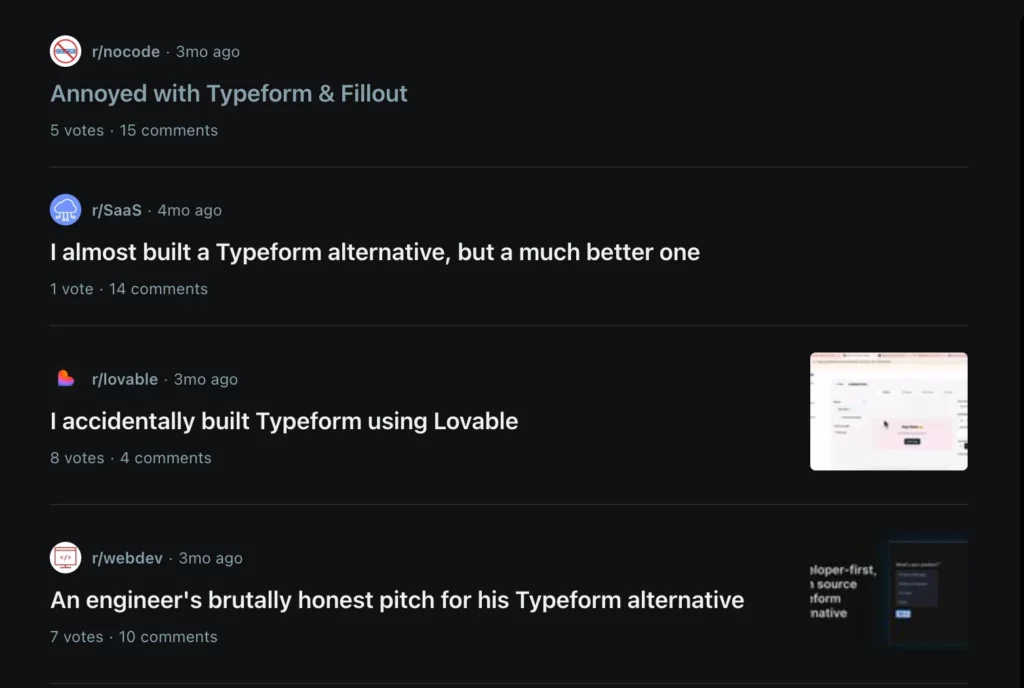
Then there’s branding control. You can’t remove the Typeform logo unless you upgrade to the higher tiers. For businesses aiming for a fully branded experience, this feels restrictive.
Embedding flexibility is another limitation. While Typeform’s designs look great standalone, embedding them on a WordPress site can feel awkward. You get limited design control, and custom styling is tricky.
Finally, data control. All submissions are stored on Typeform’s servers. For privacy-conscious businesses or agencies managing client data, this setup can be a concern.
Each of these issues is understandable for a hosted SaaS product, but they also justify why so many users start exploring WordPress-based solutions. You get conversational forms, ownership, and freedom – without paying monthly.
How I lined up the Typeform alternatives
When I started testing these alternatives, I looked for tools that can replicate Typeform’s interactive experience without losing the simplicity that makes it great. My focus was on how easily users can switch from SaaS to WordPress and still feel comfortable.
Here are the key metrics I considered while shortlisting these plugins:
- Ease of use: A drag-and-drop interface that anyone can master.
- Features: Must support conversational forms, logic, and customization.
- Integrations: Should connect with email tools, CRMs, and automation platforms.
- Support: Active help and documentation when you need it.
- Cost-effectiveness: Affordable pricing, ideally with a lifetime deal.
With these in mind, here are my top 9 WordPress alternatives to Typeform.
Quick Overview – Typeform Alternatives in WordPress
| Plugin | Free Version Strength | Pro Pricing | Conversational Forms | Ideal For |
|---|---|---|---|---|
| Fluent Forms | Excellent – full-featured and integration-rich | From $79/year or $349 lifetime | Yes (Free) | Small businesses and users who want full control |
| QuillForms | Excellent – built for conversational experiences | From $99/year | Yes (Core Feature) | Users seeking a native Typeform-style builder |
| Gravity Forms | Strong – premium and powerful | From $59/year | Yes (via add-on) | Agencies and advanced users |
| WS Form | Excellent – developer-grade flexibility | From $59/year | Yes | Developers or power users |
| Forminator | Excellent – interactive and generous | From $15/month (WPMU DEV) | No | Interactive sites, small business engagement |
| Ninja Forms | Good – modular and beginner-friendly | From $99/year (add-ons separate) | Partial | Small businesses and agencies |
| Formidable Forms | Strong – technical and data-driven | From $79/year | Yes (via add-on) | Users needing advanced or data-rich forms |
| Bit Form | Strong – integration-heavy and affordable | From $39/year | Partial | Freelancers, startups, automation-focused users |
Fluent Forms
Fluent Forms and Typeform share the same purpose – to help users build engaging, frictionless forms. But the way they approach it is very different.
Typeform is built around experience. It feels warm, interactive, and conversational. The interface invites users to respond, one question at a time, in a dialogue-like flow. It’s cloud-based, which means you don’t have to worry about hosting, speed, or setup. Everything happens inside Typeform’s platform – fast and polished, but also confined to its structure.
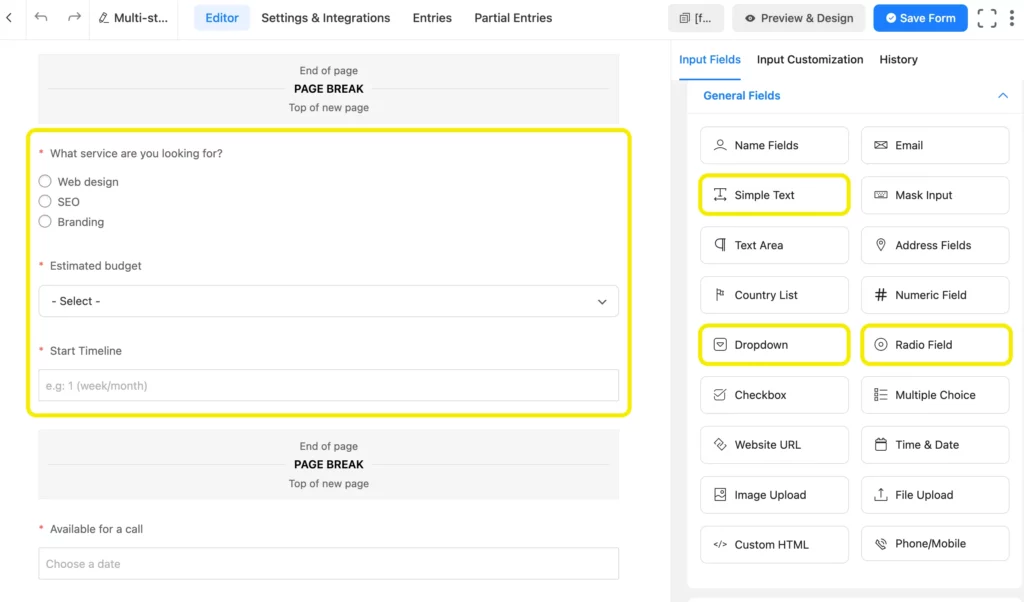
Fluent Forms, on the other hand, takes that conversational spirit and brings it natively into WordPress. You don’t need an external account or monthly subscription. The conversational form module in Fluent Forms is free, which already changes the economics for many small businesses and creators who loved Typeform but couldn’t justify the ongoing cost.
Where Typeform shines in design fluidity and visual storytelling, Fluent Forms balances function with control. You get drag-and-drop form building, conditional logic, payments, and integrations – all inside your own WordPress dashboard. The form experience remains smooth, but now you own everything: data, design, and performance.
In Typeform, your customization stops where their brand boundaries begin. Fluent Forms opens that door. You can tailor layouts, adjust colors, or embed seamlessly into your site – no iframe limitations. It’s less about following a predefined aesthetic and more about shaping the form around your website’s identity.
For users who love Typeform’s conversational tone but want that same experience without cloud dependency, Fluent Forms makes sense. It’s not a replacement – it’s a shift in control. You trade some hosted convenience for deeper ownership and long-term flexibility.
Pricing: Free on WordPress.org. Pro starts at $79/year with lifetime plans from $349.
Build Smarter Forms for Free

Bit Form
Bit Form and Typeform share the same end goal – seamless data collection and automation – but the way they achieve it couldn’t be more different.
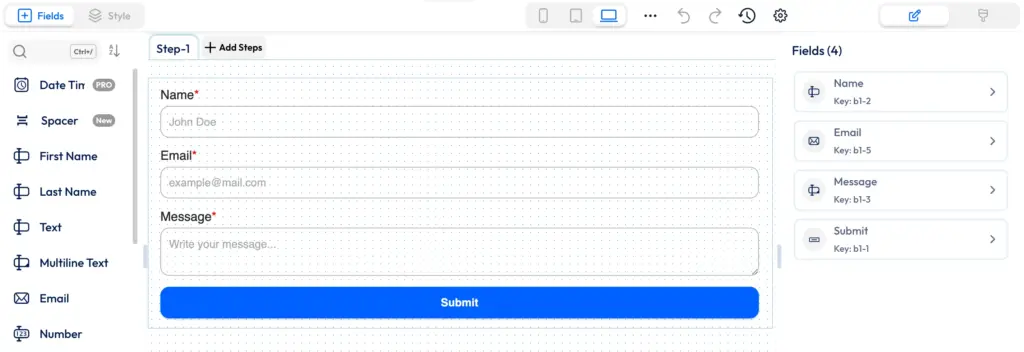
Typeform is sleek, polished, and hosted – you sign up, design, and publish, but your data and limits live in their ecosystem. Bit Form brings that experience into WordPress, with a lightweight builder that’s focused on real integrations and workflow control.
It supports multi-step and conversational form flows, and even at the free level, connects to Google Sheets, FluentCRM, Mailchimp, Pabbly, and Webhooks. That makes it ideal for users managing lead generation, automation, or CRM syncing directly from their own site.
Typeform wins in visual engagement. Bit Form wins in independence. It’s designed for creators who like the fluidity of Typeform but prefer to build inside their own ecosystem, with no recurring cost.
Pricing: Free version available; Pro starts at $39/year with lifetime options.
Quill Forms
Quill Forms and Typeform share the same heartbeat – a conversational flow that turns form filling into dialogue. But QuillForms does it inside WordPress, where you control both the experience and the environment.
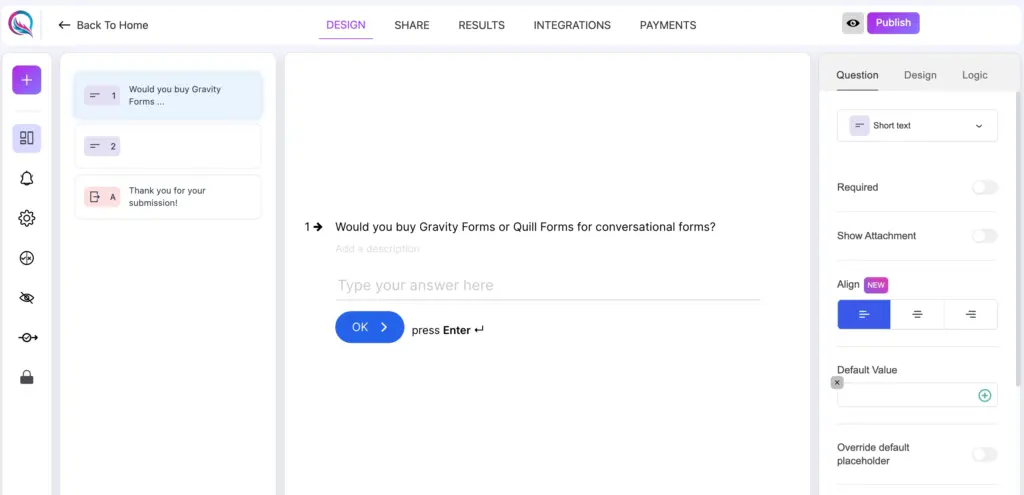
Typeform runs in the cloud. You get a sleek interface and instant hosting, but every customization happens inside their design boundary. QuillForms takes the same conversational logic – one question at a time, smooth transitions, animated flow – and brings it to your own WordPress dashboard. You host it, you design it, and you decide how it blends into your brand.
In terms of usability, both are incredibly beginner-friendly. Typeform’s drag-and-drop flow feels cinematic, while QuillForms’ block-style builder feels familiar to WordPress users. You can style each question, add logic, and embed directly without relying on iframes or external hosting.
Integration-wise, QuillForms connects natively with Slack, Mailchimp, HubSpot, Google Sheets, and Zapier, letting you automate easily without stacking costs. That’s where it quietly edges ahead for small businesses and freelancers who want Typeform’s experience without subscription limits.
If you like Typeform’s energy but want to keep ownership, QuillForms makes the transition almost seamless. It’s conversational, self-hosted, and fully yours to shape.
Pricing: Free version available; premium starts at $99/year.
Gravity Forms
Gravity Forms and Typeform aim for the same goal – helping users build smarter, more interactive forms – but they live in completely different worlds.
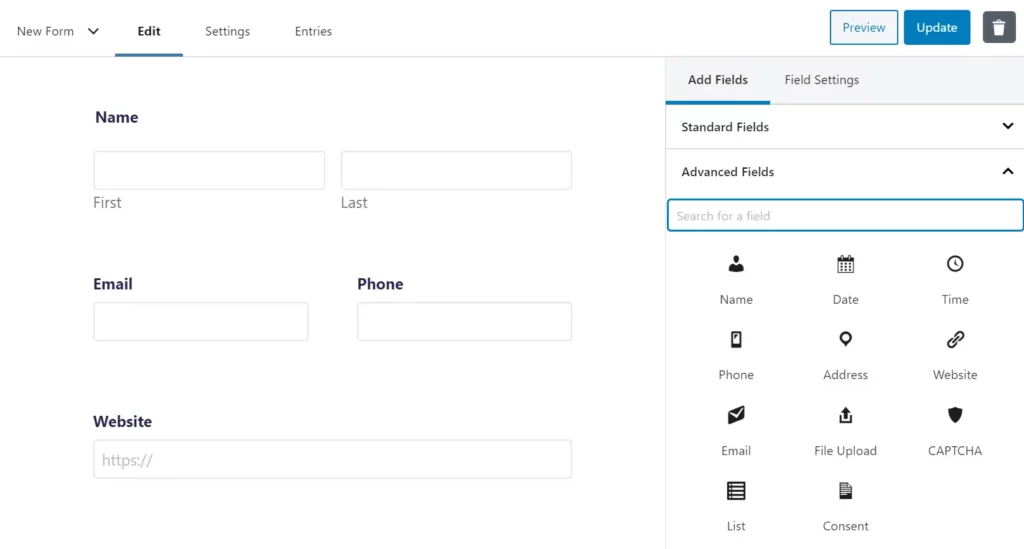
Typeform’s strength lies in aesthetics. It guides users through questions one at a time, making every submission feel like a human conversation. Gravity Forms, on the other hand, is pure power. It’s built for WordPress users who want flexibility, data ownership, and automation that can grow with their business.
Typeform gives you polish; Gravity Forms gives you depth. You can create conditional workflows, use multi-page layouts, and even add conversational-style behavior through the Conversational Forms Add-On. It’s not as cinematic as Typeform, but it gives you absolute control over function and design.
In integrations, Gravity Forms goes beyond marketing tools – connecting with HubSpot, ActiveCampaign, Dropbox, Google Sheets, and Zapier for full workflow automation. It’s a developer’s toolkit wrapped in a clean interface.
Typeform offers elegance and simplicity. Gravity Forms offers precision and ownership. The question is whether you’d rather use a system or build one that’s fully yours.
Pricing: No free version available. Starts at $59/year; additional add-ons available for extended functionality.
WS Form
WS Form and Typeform couldn’t look more different, but both share a commitment to precision and performance.
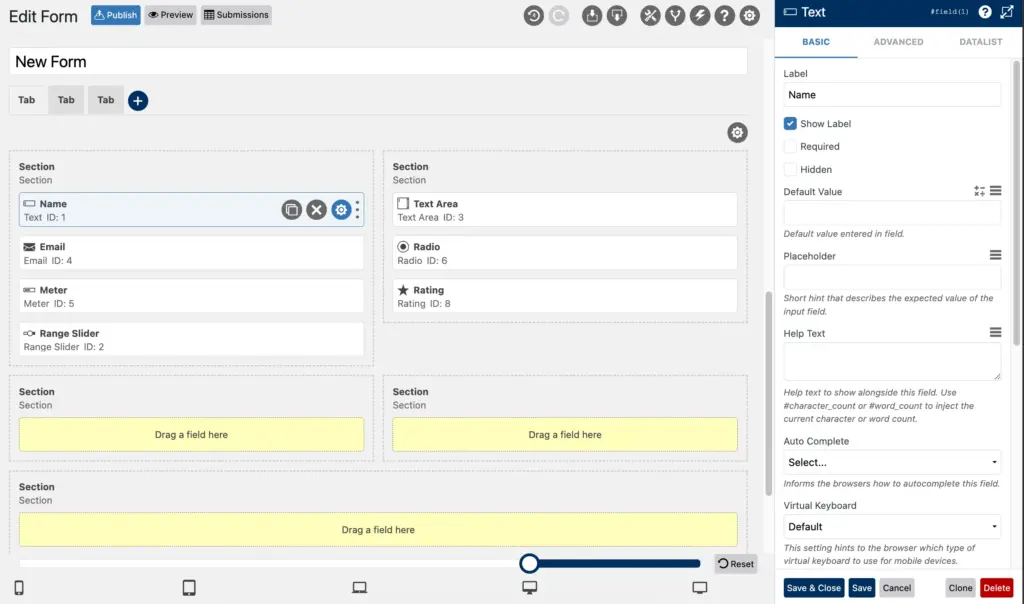
Typeform prioritizes the respondent’s experience – clean visuals, fluid motion, and a question-by-question dialogue that makes data collection engaging. WS Form takes that same mission and translates it into a technical framework inside WordPress. It’s visual, fast, and engineered for complete customization.
While Typeform limits customization to within its hosted platform, WS Form lets you go deep. You can build complex multi-step forms, add real-time calculations, set conditional logic, and even debug or test performance visually. It’s not as “storytelling-oriented” as Typeform, but it’s far more flexible once you want to adapt to unique use cases.
In integrations, WS Form plays big – connecting with FluentCRM, Mailchimp, HubSpot, Airtable, Slack, and Google Sheets. You can create conversational-like flows or detailed data forms under your own hosting, with no branding or usage limits.
Typeform delivers guided engagement. WS Form delivers technical freedom. Both aim for excellence, just through entirely different lenses.
Pricing: Free version available on WordPress.org; Pro plans start at $59/year.
Forminator
Forminator and Typeform both aim to make forms interactive and enjoyable. But where Typeform is all about visual conversation, Forminator balances that experience with practicality and ownership.
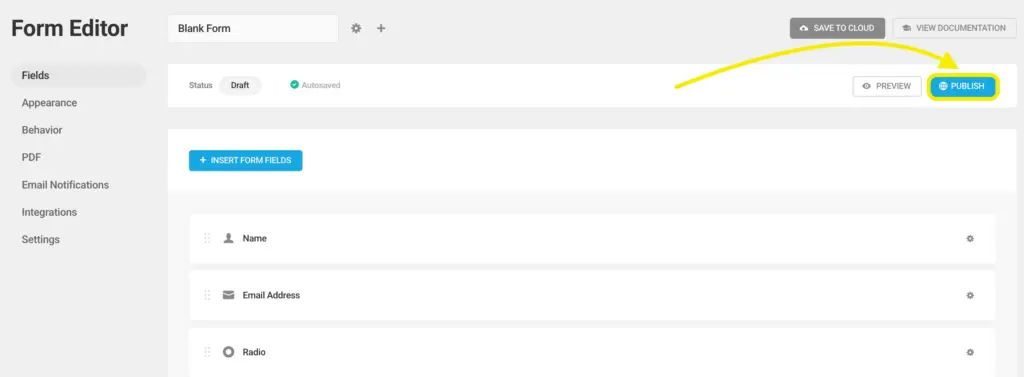
Typeform’s cloud-based forms feel smooth and personal, while Forminator lets you recreate that experience within WordPress – no form hosting fees, no response limits. You can build multi-step forms, quizzes, and even polls that mimic Typeform’s flow, but with direct control over styling and behavior.
Forminator integrates with Slack, Trello, Google Sheets, and PayPal, offering built-in payments and logic handling without premium extensions. It doesn’t match Typeform’s polish, but it wins in flexibility – you can shape the interface to fit your site’s layout, not the other way around.
Typeform keeps you focused on simplicity. Forminator gives you room to experiment. For users who value both engagement and practicality, it’s an easy middle ground.
Pricing: Free core plugin; Pro available through WPMU DEV at $15/month.
Ninja Forms
Ninja Forms and Typeform approach form building from two distinct angles. Typeform focuses on conversational storytelling, while Ninja Forms focuses on simplicity and structure.
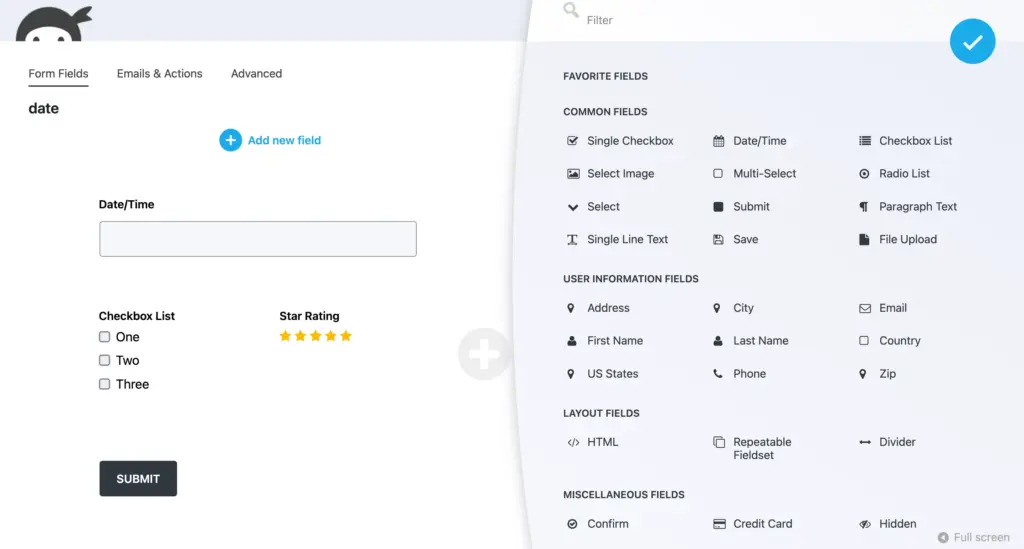
Typeform’s strength is in experience – flowing transitions, guided questions, emotional engagement. Ninja Forms simplifies creation – drag, drop, and publish directly in WordPress. It’s not conversational by nature, but with conditional logic and multi-step layouts, you can design a guided flow that still feels personal.
The real difference is in control. Typeform hosts your data and limits design within its ecosystem. Ninja Forms stores everything on your server, giving you flexibility over style, structure, and integrations. It works seamlessly with Mailchimp, HubSpot, AWeber, and Zapier, covering all major automation needs.
Typeform inspires interaction. Ninja Forms simplifies execution. Both make form creation easy – one with narrative flair, the other with practical control.
Pricing: Free core plugin; paid plans start at $99/year.
Formidable Forms
Formidable Forms and Typeform share an ambition – to turn forms into meaningful experiences. But their strengths diverge quickly once you start building.
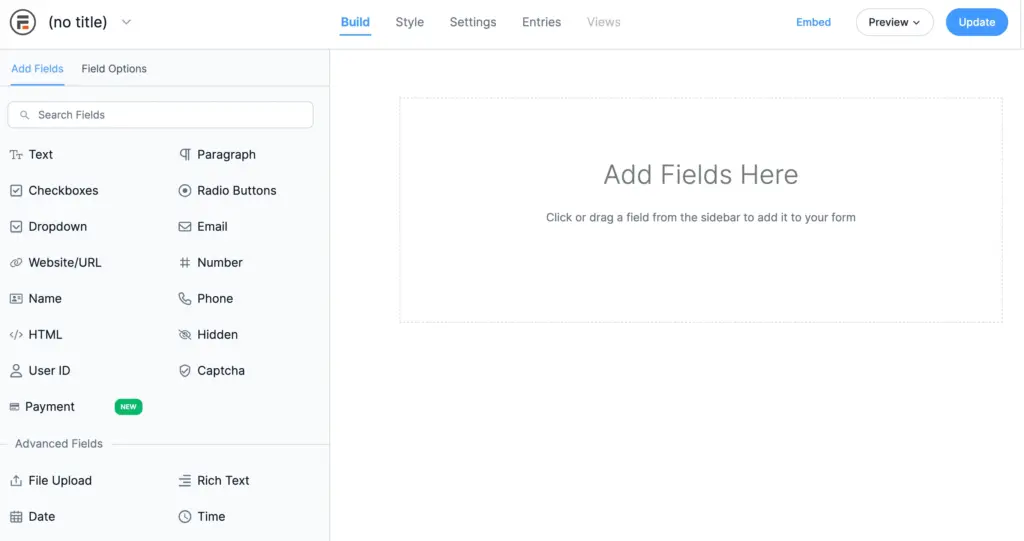
Typeform is about the front end – how users feel while filling out your form. Formidable Forms is about the back end – what happens after the data is collected. You can create conversational flows, yes, but also advanced tools like calculators, directories, and data views directly on your site.
In usability, both are visual, but Formidable adds more functional muscle. You can pull data, transform it, and display it in real time. Integrations like Mailchimp, HubSpot, Salesforce, Airtable, and Zapier give it enterprise-level automation potential, while staying entirely self-hosted.
Typeform feels polished. Formidable Forms feels powerful. It’s less about imitation and more about expansion – turning your form into a dynamic data system you fully own.
Pricing: Core plugin available for free, pro version starts at $79/year with higher tiers for advanced integrations and data views.
Enjoying this article?
We regularly publish actionable content on our blog. Subscribe to get them delivered straight to your inbox.
We won’t spam you. You can unsubscribe whenever you want.
Now, the decision part
Typeform deserves credit for shaping how modern forms should feel. It made online data collection personal, interactive, and even enjoyable. But as WordPress tools evolved, that same sense of engagement became available without subscription limits or data dependencies.
If you want a full-featured, self-hosted form builder that includes conversational forms for free, Fluent Forms is the most balanced choice. It gives you design freedom, built-in integrations, and complete data control, all while keeping your workflow lightweight.
If you want to stay close to Typeform’s one-question-at-a-time experience but inside WordPress, QuillForms is the most direct transition. It offers that same dialogue-driven flow, but you own everything from branding to storage.
For users who want advanced workflow automation or detailed calculations, Formidable Forms and Forminator stand out. They take form building to the next level with dynamic data handling and complex logic.
If you like a technical edge and developer-level precision, WS Form and Gravity Forms will fit your workflow. Both allow complete customization, real-time calculations, and deep integration capabilities without external dependencies.
If you prefer simplicity and a guided setup, Ninja Forms offers a clear and approachable experience that still connects well with marketing and CRM tools.
And if your focus is cost-effective automation with strong integration options, Bit Form quietly delivers real value. It handles multi-step and conversational forms, connects easily with CRMs, and does it all under your own hosting.
Each of these tools reflects a different approach to what Typeform began. The difference now is choice. Whether you care about design, control, or automation, the WordPress ecosystem offers alternatives that give you the same engagement with more flexibility and ownership.
When choosing your next form builder, think about how much control you want over your data and how far you plan to grow. The right tool will not only collect information but also fit naturally into the way you work.
Questions in mind? Drop them in the comments, and I’ll help you find the one that fits your workflow best.

This is Sumit. He’s a physics major who’s trying to understand both the physical as well as the WordPress worlds. Whenever he’s not busy, plays fifa or spends time with his family.


Leave a Reply