

131+ AI Statistics and Trends You Need To Know in 2026
AI is no longer a trend. It is already inside the tools you use, the platforms you search on, and the workflows your team relies on every day. Generative AI reached 53% global adoption in just three years, faster than the internet reached the same milestone.
It’s important to plan how you use AI for the decisions you make this year. How you hire, create content, and how people find your website. How your team can be more efficient and productive. That’s what this list will help you with.
These 101+ AI statistics for 2026 are organized by category so you can quickly find what’s relevant to you. Whether you are tracking market trends or making a case for investment, you’ll get a clear insight into what’s happening across the industry right now.
TL;DR
- Unprecedented Growth & Adoption: Corporate AI investment reached $581.7 billion, with organizational AI adoption hitting 88% and generative AI reaching 53% global adoption in just three years.
- The AI Wage Premium: Workers with advanced AI skills earn 56% more than their peers, and AI “super-users” save up to 9 hours a week while being 3x more likely to receive a promotion.
- The Rise of Agentic AI: Autonomous AI agents are the biggest shift of 2026, already deployed by 97% of executives, though many companies still lack the proper governance to supervise them.
- Search and SEO Disruption: AI search traffic increased by 527% year-over-year, and with Google AI Overviews reaching 2 billion users, optimizing for AI citations is now just as critical as traditional SEO.
- Universal Business Use: 98% of the U.S. small businesses now use AI-enabled tools for everyday tasks like customer service, spam filtering, and automated website form building.
- Industry Transformations: AI is rapidly advancing in specific sectors, notably outperforming human surgeons in medical report accuracy (87.3%) and being utilized by 80% of university students.
- Trust and Regulation Catching Up: While most consumers see the benefits of AI, strict regulations like the EU AI Act are forcing organizations to prioritize security, transparency, and human-AI hybrid collaboration over pure automation.
Top AI Statistics at a Glance (2026)
Here are the highlight numbers across every major AI category:
- Corporate AI investment reached $581.7 billion in 2025.
- Organizational AI adoption reached 88% in 2025.
- Generative AI adoption hit 53% globally in three years.
- 97% of employees personally benefited from AI in the past year.
- AI is projected to contribute $15.7 trillion to the global economy by 2030.
- Workers with AI skills earn 56% more than peers without those skills.
- Two in three report using an AI tool or application in the last twelve months (66% average across 21 countries).
- AI search traffic grew 527% year-over-year.
AI Market Size and Investment Statistics
AI is the largest investment category in technology history. In 2025, private AI investment alone topped $344 billion. Companies plan to double their AI spending in 2026. Here’s what the data shows.
Global AI market size
1. AI market size is expected to grow by at least 120% year-over-year.
2. AI is projected to contribute $15.7 trillion to the global economy by 2030.
3. U.S. consumer surplus from generative AI reached $172 billion annually by early 2026, up from $112 billion a year earlier. Median value per user tripled.
AI investment and funding
4. Global corporate AI investment hit $581.69 billion in 2025, a 129.9% year-over-year increase. Private investment alone reached $344.7 billion (+127.5%).
5. Generative AI private investment grew over 200% and captured nearly half of all private AI funding ($170.9 billion) in 2025.
6. U.S. private AI investment in 2025 reached $285.9 billion, 23.1 times China’s $12.4 billion and 48.5 times the UK’s $5.9 billion.
Global private investment in AI by geographic area, 2025
Source: Quid, 2025 | Chart: 2026 AI Index report
7. California alone accounted for $218 billion, over 75% of total U.S. AI investment.
8. AI captured $242 billion, about 80% of the total global startup investment ($300 billion in Q1 2026).
9. Four frontier labs captured $188 billion (65% of global Q1 venture capital): OpenAI $122 billion, Anthropic $30 billion, xAI $20 billion, and Waymo $16 billion.
10. Mega-rounds of $100 million or more accounted for a record 94% of AI funding. Average deal size was $160 million, four times the 2025 average of $38 million.
11. Companies plan to double their AI spending in 2026, from 0.8% to about 1.7% of revenues.
12. 84% of companies are increasing their AI budgets.
13. 83% of CFOs plan to increase enterprise-wide AI spending by over 15% in the next two years. 42% plan increases of 30% or more.
AI infrastructure spending
14. NVIDIA’s full FY2026 revenue reached $215.9 billion (+65% year-over-year). Data center revenue in Q4 alone was $62.3 billion (+75% year-over-year), making up 91% of total ($68.1 billion)
15. AI data center power capacity reached 29.6 GW globally, enough to power New York State at peak demand.
16. The U.S. hosts 5,427 AI data centers, 10 times more than any other country. 17. Global data-center construction costs are projected to reach $2.9 trillion through 2028, with $1.6 trillion allocated for hardware, and $1.3 trillion for infrastructure.
AI Adoption Statistics
Nearly every large organization is using AI. But while some are actually integrating AI into their work, others are still running isolated pilots. This difference is largely influencing their ROI.
Enterprise AI adoption
18. Organizational AI adoption reached 88% in 2025.
19. 77% of companies are either using or exploring AI in their businesses. 83% of companies claim AI is a top priority in their business plans. (National University, citing Exploding Topics)
20. 20.2% of firms reported using AI in 2025, up from 14.2% in 2024 and 8.7% in 2023.
21. The enterprise-size gap remains wide: 52% of large firms vs. 17.4% of small firms use AI.
22. 34% of companies now use AI to “deeply transform” their business. 25% of leaders now report that AI is having a transformative effect on their companies, up from 12% a year ago.
23. Worker access to sanctioned AI tools rose from under 40% to approximately 60%, a 50% year-over-year increase.
24. Only 25% of companies have moved 40% or more of their AI experiments into production. 54% expect to reach this level within 3 to 6 months.
25. 63% of organizations intend to adopt AI globally within the next three years.
26. 49.9% of the top 1% of firms have adopted AI, compared to only 1.3% of the smallest third.
AI adoption by region
27. AI adoption per capita is highest in Singapore, followed by UAE, Hong Kong, and South Korea. The U.S. ranked 20th.
Where in the World is AI Adoption Happening?
Singapore, Hong Kong, and the UAE lead in AI adoption, while the US is at No. 20
28. AI uptake exceeds 35% in Denmark, Finland, and Sweden.
29. Nearly 40% of Indian respondents report “significant or full” AI use, compared to a 28% global average.
30. Regional CEO confidence varies widely. About 75% of CEOs in India and Greater China are confident AI will pay off, compared to 44% in the UK and 52% in the U.S
31. The European Commission committed €20 billion to InvestAI for up to five AI gigafactories across the EU.
Consumer AI adoption
32. 66% of adults across 21 countries have used an AI tool in the past 12 months, up 18% from 2024 and 28% from 2023.
33. Generative AI reached 53% global adoption in three years, faster than PC and the internet at the same stage.
34. ChatGPT now has 700 million weekly active users, making the platform the fifth most visited website globally with over 5 billion monthly visits.
35. 55% of Americans say they regularly use AI. 44% believe they do not.
36. 77% of devices being used have some form of AI. Only a third of consumers think they are using AI platforms, while actual usage is 77%.
37. More than one-third of individuals across the OECD used generative AI tools in 2025. The largest divide is by age (usage rate is higher for ages 16 to 24), while the gender gap in AI use is relatively small, at 4.2 percentage points.
Generative AI Statistics
Generative AI is where most of the money, attention, and productivity gains are concentrated right now. Whereas the individual productivity numbers are striking, the harder challenge for most organizations is turning those individual wins into results at the company level.
GenAI market and growth
38. Private AI companies raised $226 billion in Q1 2026, surpassing all of 2025 ($217 billion) in a single quarter.
39. Companies allocating 50% or more of their IT budget to AI are set to rise from 3% today to 19% next year.
GenAI usage and productivity
40. Most leaders (87%) report that AI super-users are at least 5X more productive than employees who aren’t embracing AI.
41. AI super-users save nearly 9 hours per week, 4.5 times more than the 2 hours a week reported by AI laggards.
42. Nearly all (96%) organizations investing in AI are experiencing some amount of return in productivity, including 57% that say their gains are significant.
43. Companies with $10 million or more in AI budgets are 71% likely to report significant productivity gains, compared to 52% for companies with smaller budgets.
44. Anthropic’s Economic Index found a 12x speedup for prompts requiring a college degree, while only a 9x speedup for prompts requiring a high school education.
45. About 49% of jobs have seen at least a quarter of their tasks performed using Claude.
46. 66% of companies report productivity or efficiency gains from AI.
AI benefits achieving today vs. hope to achieve (percent)
47. 70% of employees and 94% of the C-suite use AI tools for at least 30 minutes daily. 64% of executives spend two hours or more.
GenAI challenges
48. Only 29% of organizations see significant ROI from generative AI, and only 23% from AI agents.
49. 75% of executives admit their company’s AI strategy is “more for show” than actual internal guidance.
50. 67% of executives believe their company has already suffered a data leak or security breach due to unapproved AI tools.
51. 48% executives call AI adoption a “massive disappointment,” up from 34% last year.
52. 79% of organizations face challenges in adopting AI, a double-digit increase from 2025.
53. One-in-eight (12%) CEOs say AI has delivered both cost and revenue benefits. Overall, 33% report gains in either cost or revenue, while 56% say they have seen no significant financial benefit.
Agentic AI Statistics
AI agents are the biggest shift of 2026. Unlike a chatbot or a copilot, an agent plans, reasons, and executes tasks on its own. Businesses are moving fast on deployment, but they’re not as strict about governance. This lack is causing uncertainty in this category.
54. 97% of executives say their company deployed AI agents in the past year. 52% of employees are already using them.
55. The agentic AI market is expected to reach $10.86 billion in 2026, up from $7.55 billion in 2025.
56. The agentic AI market is estimated to reach $93.2 billion by 2032, growing at a CAGR of 44.6%.
57. 74% of companies plan to deploy agentic AI within two years. Only 21% report having a mature
model for governance of autonomous agents.
Main obstacles to reaching fully scaled agentic AI, 2025
Source: McKinsey & Company Survey, 2025 | Chart: 2026 AI Index report
business value
ecosystem landscape
58. 40% of enterprise applications will include integrated task-specific AI agents by the end of 2026, up from less than 5% in 2024.
59. 40% of agentic AI projects will be cancelled by 2027 due to escalating costs and unclear business ROI.
60. CEOs have committed over 30% of their 2026 AI investment to agentic AI.
61. AI agents could perform tasks that occupy 44% of U.S. work hours at current capability levels.
62. 75% of executives expect AI agents to be part of their company’s C-suite within the next five years.
63. 36% of executives do not have a formal plan for supervising AI agents. 35% admit they could not immediately shut down a rogue agent.
If your business is experimenting with AI agents, it’s important to build oversight processes before scaling.
AI Jobs and Workforce Statistics
AI is creating more jobs than it is displacing, at least for now. But the nature of work is changing quickly. Workers who are adapting their skills are already earning more and getting promoted faster than those who are not.
Job displacement vs. creation
64. The World Economic Forum projects 170 million (14%) new roles will be created and 92 million (8%) displaced by 2030, a net gain of 78 (7%) million positions.
65. Job disruption will affect 22% of all jobs by 2030.
Fastest Growing vs Fastest Declining Jobs (2025 – 2030)
66. AI could replace the equivalent of 300 million full-time jobs, according to Goldman Sachs.
67. 66% of enterprises are reducing entry-level hiring as they deploy AI.
68. Through 2026, 20% of organizations will use AI to flatten their organizational structure, eliminating more than half of current middle management positions.
69. 40% of employers anticipate reducing their workforce where AI agents automate tasks. 70% expect to hire staff with new skills, and 50% plan to transition staff from declining to growing roles.
AI Skills and Wages
70. Workers with advanced AI skills earn 56% more than peers in the same roles without those skills.
71. 39% of existing skill sets of workers can be expected to transform or become outdated over the 2025-2030 period.
72. Over 90% of global enterprises will face a critical AI skills shortage by 2026.
73. 77% of employers plan to reskill or upskill their workers to work more effectively alongside AI.
74. 80% of the engineering workforce will need upskilling through 2027 to keep pace with generative AI.
75. AI super-users were 3x more likely to have received a promotion or a pay raise in the past year.
76. 92% of the C-suite admit they are actively cultivating a new class of “AI elite” employees. 60% plan to lay off those who do not adopt AI.
Most in-demand AI jobs
77. Fastest-growing job postings for freshers include AI engineer, Marketing coordinator, Recruitment assistant, Legal specialist, Human resources operations specialist, and Business development representative, among others.
78. AI is expected to improve employee productivity by 40%. 60% of business owners believe AI will increase their productivity.
79. About two-thirds of employers plan to hire talent with specific AI skills.
AI in Business Statistics
Most businesses are already using AI in some form, even if they do not always label it. The question is whether it’s actually working. The data tells a mixed story: clear wins in specific use cases but frustration when organizations try to apply it broadly without a clear plan.
Business adoption and use cases
80. The most common uses for AI in business are customer service (56%), cybersecurity and fraud management (51%), digital personal assistants (47%), customer relationship management (46%), and inventory management (40%).
81. 98% of U.S. small businesses are using an AI-enabled tool.
82. 35% of all companies worldwide report using AI in their business.
83. The most common reason for businesses not using AI is finance and cost (51%). 35% worry they do not have the technical skills.
84. The manufacturing sector will likely see the greatest benefit from AI, with a projected gain of $3.8 trillion by 2035.
AI ROI and executive sentiment
85. More than 90% companies plan to continue investing in AI even without near-term ROI. Nearly all CEOs believe that AI agents will produce measurable returns in 2026.
86. 50% of CEOs believe their jobs are on the line if AI does not pay off.
87. Nearly 75% of CEOs say they are their organization’s main decision-maker on AI, double last year’s share.
88. 78% of leaders now see AI as more beneficial to revenue growth than cost reduction, up from 65% in 2024.
89. Companies applying AI widely to products, services, and customer experiences achieved nearly four percentage points higher profit margins than non-adopters.
90. Industrial AI deployments at scale are achieving 30% to 50% productivity gains and up to 35% maintenance-cost reductions.
AI for small businesses
If you are running a small business, AI is already part of your toolkit, even if you do not think of the specific tools as “AI”. From the email spam filter you rely on daily to the chatbot answering customer questions on your website, AI is embedded in the products you use.
91. The top ways consumers use AI are: responding to people via text or email (45%), answering financial questions (43%), and planning travel itineraries (38%).
92. Nearly two-thirds of business owners think AI will improve their customer relationships.
93. 97% of business owners think using ChatGPT will help their businesses.
If you are looking for AI-powered tools for your own website, WordPress form builders like Fluent Forms now include AI features for generating forms, writing field labels, and saving you time on repetitive setup tasks.
AI in Healthcare Statistics
Healthcare is one of the fastest-growing sectors for AI. Physician adoption nearly doubled in a single year, and AI-generated medical reports now outperform human-written ones in accuracy.
94. The global AI in healthcare market is projected to increase from USD 51.20 billion in 2026 to approximately USD 613.81 billion by 2034, a CAGR of 36.83%.
95. 66% of physicians used AI in their practice in 2024, a 78% increase from 38% in 2023.
96. AI-generated operative reports had 87.3% accuracy, outperforming surgeon-written reports at 72.8% accuracy.
97. Over 340 FDA-approved AI tools are being used in clinical settings, primarily for diagnosing strokes, brain tumors, and breast cancer.
98. The average ROI for AI in healthcare is $3.20 for every $1 invested, with typical returns seen within 14 months.
99. Microsoft’s Diagnostic Orchestrator solved complex medical cases with 85.5% accuracy, far above the 20% average for experienced physicians.
AI in Education Statistics
Students are adopting AI fast. Educators and parents are catching up.
100. 4 out of 5 university students use GenAI.
101. 9 in 10 students want to learn more about AI in school.
102. 87% of educators have not received any AI training as part of their professional development.
103. 54% of parents think AI could potentially have a positive effect on their child’s education.
104. 80% of parents have concerns about the harmful effects of AI in education. Top concerns are privacy/data and accuracy and reliability of AI-generated content.
105. U.S. adults with higher levels of education and income demonstrate greater awareness of AI: 53% of postgraduates versus 14% of those with a high school education or less.
106. 75% of students 16 and older across OECD countries used GenAI tools in 2025.
Consumer AI Usage Statistics
People are using AI every day, often without thinking of it as AI: spam filters, search summaries, travel planning, writing assistance, and more. With time, their trust in AI is growing, and the way people search for information is changing how businesses get found online.
107. About 2 out of 3 people (67%) would use ChatGPT instead of Google.
108. Nearly 35% of Gen Z people in the U.S. use AI chatbots to search for information.
109. 78% of people polled think the benefits of generative AI outweigh the risks.
110. 65% of consumers trust businesses using AI. 14% do not. 21% are neutral.
111. 54% of consumers think written content will improve with AI technology.
112. Workplace AI usage by type: email spam filters (78.5%) and chatbots for customer service (62.2%).
AI and Search Statistics
If you publish content or maintain a website, this section is important for you. AI Overviews now reach two billion monthly users. AI search traffic grew 527% year-over-year. The way people discover information is shifting, and the sites that understand this shift early will be able to adapt in time.
113. Google AI Overviews now reach 2 billion monthly users across more than 200 countries.
114. AI search traffic grew 527% year-over-year. Some sites (especially SaaS) now report over 1% of total sessions coming from platforms like ChatGPT, Perplexity, and Copilot.
115. AI search traffic could surpass traditional search traffic by 2028.
Projected Annual Visitors by Source
116. About 60% of searches on traditional search engines now end in no clicks.
117. Only 8% of users click a traditional link when an AI summary appears. Without a summary, the rate nearly doubles to 15%.
118. The average LLM visitor is worth 4.4 times more than a traditional organic search visitor.
119. AI referral visits have a 27% lower bounce rate than non-AI traffic for retail sites. These visits are 38% longer and involve viewing more pages.
120. 50% of ChatGPT’s cited links point to business and service websites.
121. ChatGPT users click an average of 1.4 external links per visit, compared to 0.6 from Google.
122. Nearly 70% of businesses report higher ROI from using AI in SEO.
Your content strategy should account for AI-generated search results. Publishing accurate, well-sourced content gives your pages a better chance of being cited by AI platforms and featured in AI Overviews.
AI Trends for WordPress
WordPress powers over 40% of the web, and AI is now woven into how WordPress sites are built, managed, and ranked. From theme generation to SEO plugins to form builders, the ecosystem has moved quickly.
123. The global AI in web development market is projected to reach $14.2 billion by 2030.
124. AI-driven personalization in web design will dominate user experience, driving up to a 15% increase in conversion rates.
125. Generative UI will cut design time for repetitive tasks by 30% to 50%, moving agencies from wireframe to production in minutes.
126. Automated accessibility remediation will become standard practice, instantly fixing up to 70% of common WCAG failures.
127. WordPress developers using AI finish tasks 40% to 60% faster than those using traditional workflows.
128. 98.1% of the top 1 million website homepages have detectable WCAG 2.0 failures, and AI-driven tools can automatically detect and fix up to 70% of common accessibility issues.
129. 58% of marketers use generative AI for content creation, a number projected to exceed 80% by end of 2026.
The most popular categories of AI WordPress uses in 2026 include SEO optimization, live chat and customer support, content generation, image optimization, and form building.
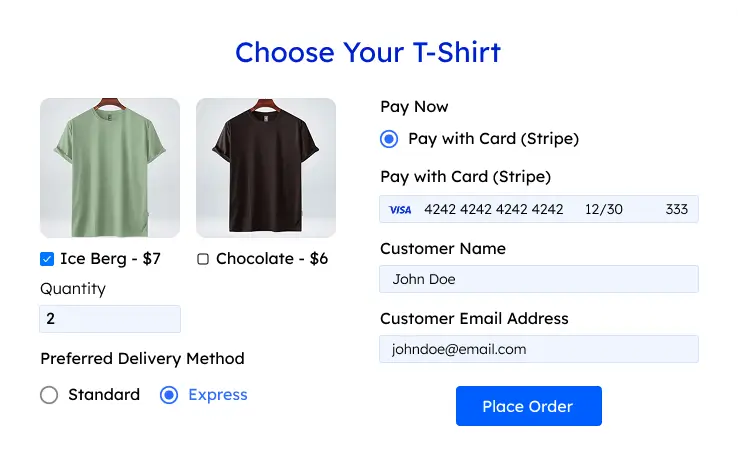
Fluent Forms offers a WordPress-native AI form builder. Instead of manually dragging and dropping fields, you describe the form you need in a prompt. The AI generates the form in seconds, complete with the right fields, labels, and settings.
Fluent Forms also supports conversational forms, multi-step forms, conditional logic, payment features, and 60+ integrations. It’s a strong choice for WordPress users who want a fast and native solution. Over 700,000 businesses use Fluent Forms worldwide.
Build Smarter Forms for Free
AI Trust and Regulation Statistics
Public confidence in AI is mixed. Most people see the benefits. Most people also have concerns. And while regulation is catching up in some regions, for the most part, it’s not aligned with what AI can do.
Public trust in AI
130. 50% of consumers view AI optimistically.
131. 80% of people are concerned about AI being used for cyber attacks. 78% are concerned about identity theft. 74% are concerned about deceptive political ads.
132. 42.1% of users say they have experienced inaccurate or misleading content in AI Overviews.
How much do you trust AI Overviews
Source: Exploding Topics133. 80% of Gen Z trust AI more than their manager for tasks like providing performance feedback and career advice.
134. 29% of employees admit to sabotaging their company’s AI strategy. Among Gen Z workers, the figure jumps to 44%.
135. 73% of CEOs report stress or anxiety about their company’s AI strategy. 61% fear losing their job if they fail to lead the AI transition.
AI regulation
136. 85% of respondents support a national effort to make AI safe and secure.
137. The EU AI Act, the world’s first comprehensive AI regulation, classifies workplace AI uses like recruitment and performance evaluation as “high risk”, requiring transparency, human oversight, and worker notification.
138. Only 8% (4/50) of Member States have issued health-specific AI guidelines to address ethical implications
139. 58% of respondents said it was more important to foster advances in science, medicine, and other fields through AI innovation, compared to 41% who prioritized protecting industries that may be affected by AI.
140. 50% of organizations will require “AI-free” skills assessments by 2026, responding to concerns about critical-thinking atrophy from GenAI use.
Key AI Trends to Watch in 2026
The numbers above point to six trends shaping this year.
1. Agentic AI is mainstream: AI agents moved from concept to deployment in under a year. 97% of executives deployed agents. 75% of companies plan wider deployment within two years. The limiting factor is governance, not technology.
2. Physical AI gains traction: 58% of companies report at least limited use of physical AI today (robots, drones, autonomous vehicles). The projection: 80% within two years. (Deloitte, January 2026)
3. AI reshapes search: AI Overviews, zero-click search, and LLM-driven discovery are changing how people find content. AI Overviews now reach two billion users a month. 60% of searches now produce no clicks. Optimizing for AI citations is becoming as important as traditional SEO.
4. The AI skills premium widens: Workers with AI skills earn 56% more. AI super-users are 3 times more likely to get promoted. The gap between those who learn AI tools and those who do not is growing.
5. AI governance is catching up: The EU AI Act is in force. 85% of people support national AI safety efforts. 40% of agentic projects face cancellation due to unclear ROI. Organizations are finding that deploying AI without an oversight process costs more than waiting.
6. Human-AI hybrid teams become the default: The future is about amplifying human work, not replacing humans. For example, a three-person team launching a global campaign in days, with AI handling data crunching, content generation, and personalization while humans direct with strategy and creativity. The winning model is collaboration, not automation.
What These AI Statistics Mean for Your Business
One number stands out from everything above: 97% of employees say they personally benefited from AI in the past year. Not companies. It’s helping Individuals do their jobs more efficiently.
You do not need a big AI budget to benefit. Start somewhere relevant to your work, pay attention to what actually helps, and build from there.
Your competitors are already using AI tools. 98% of the U.S. small businesses use a tool enabled by AI. Most of them are just saving time on their regular tasks.
Employees with AI skills earn 56% more than peers in the same roles without them. AI super-users are three times as likely to get a promotion. It’s safe to say that companies are clearly benefiting from their skills. Learn a tool that saves you an hour a day.
Start small. The largest gains are coming from everyday improvements: faster content, smarter forms, automated email responses, and better data. Pick one area from this list that is relevant to your situation. Apply what the data suggests. Track the results. Then move to the next.
Ready to Build Better Forms?
- 60+ ready input fields
- 100+ customizable templates
- Numeric calculation
- Multistep Forms with progress bar
- Conversational forms
- Quiz & Survey
- Smart logic for personalization

Sarika writes for Fluent Forms and loves to offer insights into small businesses. She’s curious and enjoys discussing ideas, interests, and perspectives. In her free time, she’s either marvelling at architectural beauties or trying different cuisines.


Leave a Reply