
14 Customer Satisfaction Survey Questions That Actually Get Answers

I have spent several years in marketing, and watched companies collecting feedback that goes nowhere. Surveys with 30 questions that nobody finishes. Generic rating scales that tell you nothing actionable. Data that sits in spreadsheets while customers quietly leave.
Here’s what I’ve learned: most people hate surveys. They’ll abandon them halfway through, give random answers to finish faster, or ignore them entirely. But when you ask the right questions the right way, something clicks. Customers actually want to tell you what’s working and what isn’t. They want to be heard.
The difference between a survey that changes your business and one that wastes everyone’s time comes down to the questions you ask. Good surveys have helped me identify product issues before they became PR disasters, discover features customers would pay premium prices for, and understand why people choose competitors over us.
These 14 questions work. They’ve been battle-tested by businesses that actually listen to their customers. Copy them, tweak them for your context, and start collecting feedback that matters.
TL;DR
- Most surveys fail because they’re too long, too generic, or never acted on.
- Good survey questions are direct, varied (scales + open-ended), and reveal the “why” behind the numbers.
- NPS predicts growth; satisfaction scores track trends over time.
- Open-ended questions like “What do you not like?” surface problems customers won’t volunteer otherwise.
- Usability and value-for-money questions catch churn risks before they cost you.
- Don’t use all 14 questions – pick 5-7 based on what you’re trying to learn.
- Send surveys at the right moment: post-purchase, post-support, or at regular intervals.
- Surveys that collect dust are worse than no survey at all – act on what you learn.
14 Customer satisfaction survey questions examples
1. How satisfied are you with our product/service?
The baseline question. Use a 1-5 or 1-10 scale.
This gives you a single number you can track over time. When it drops, something’s wrong. When it rises, you’re doing something right. Simple, but essential for spotting trends.Here’s a rephrased version you can see in the anonymous feedback form template on our website.
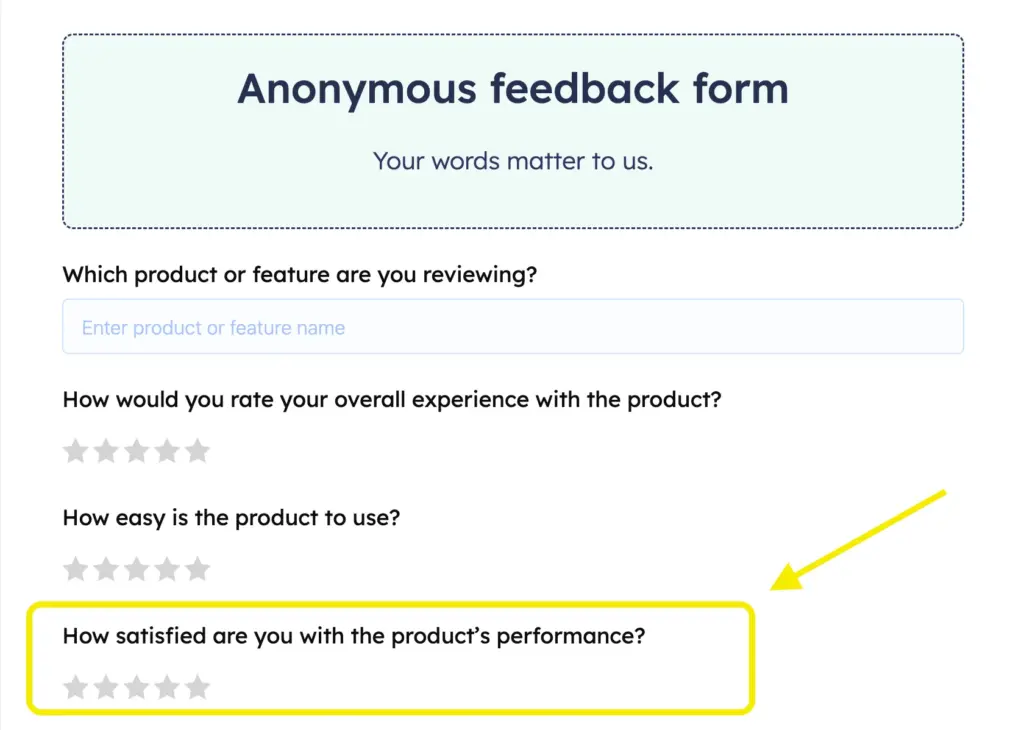
Best for: Opening your survey, tracking satisfaction over time.
2. What words would you use to describe our service?
Open-ended on purpose. You want their language, not yours.
The words customers use reveal how they actually perceive you. If they say “reliable” and “fast,” great. If they say “confusing” and “slow,” you’ve got work to do.
Bonus: these words often make excellent marketing copy.
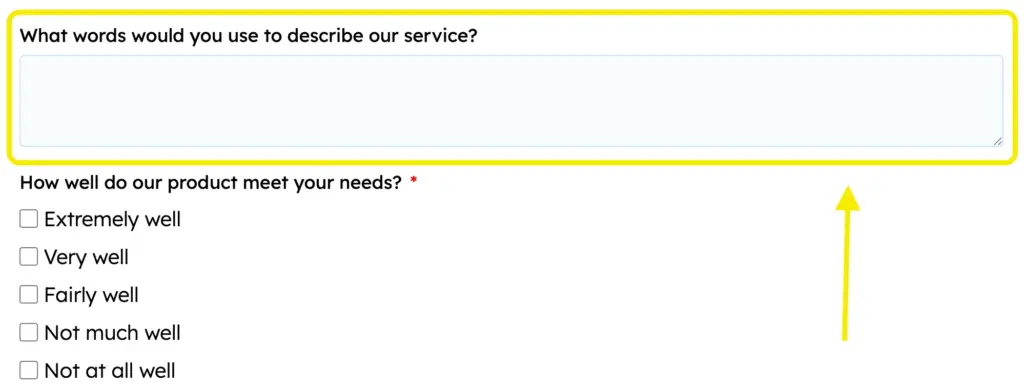
Best for: Understanding brand perception, finding messaging opportunities.
3. How likely are you to recommend our product/service to others?
The classic NPS question. Scale of 0-10.
Score Breakdown: 9-10 are promoters. 7-8 are passive. 0-6 are detractors. Subtract detractors from promoters for your NPS score. It’s not perfect, but it’s a solid predictor of growth and loyalty.
You can use this question on a new product survey to get a rough estimation of your product’s growth and loyal customer base.
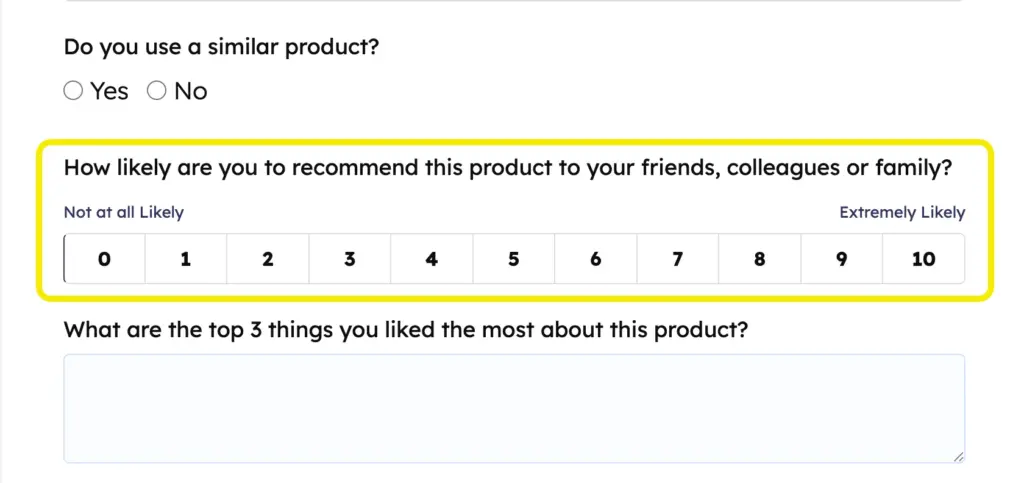
Best for: Benchmarking against industry standards, predicting growth.
4. How do you rate the quality of our customer service?
Separate this from product satisfaction. They’re different things.
Someone might love your product but hate dealing with your support team. Or vice versa. This question isolates the human element of your business.
You can use a Rating Field of any form builder you use to create this question and keep the score for analysis.
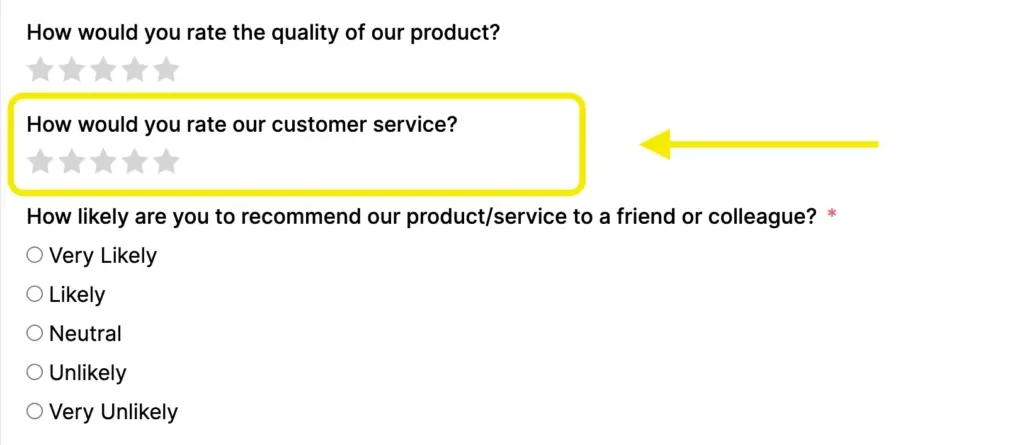
Best for: Evaluating support team performance, identifying training needs.
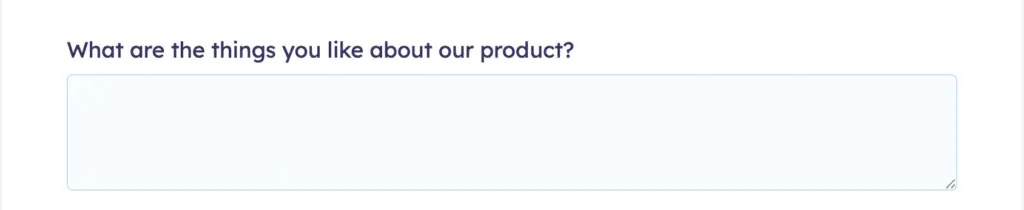
5. What do you like about our service?
Let them tell you what’s working. Don’t assume you know.
Customers often value things you take for granted. Maybe it’s your packaging. Maybe it’s how fast you respond to emails. These answers show you what to protect and double down on.
In a product survey form, this question fits perfectly.
Best for: Identifying strengths, finding features to highlight in marketing.
6. What do you not like about our product/service?
Direct. Maybe uncomfortable. Absolutely necessary.
Most customers won’t volunteer criticism unless you ask. This question gives them permission to be honest. Listen without getting defensive-this is where the gold is.

Best for: Finding pain points, prioritizing improvements.
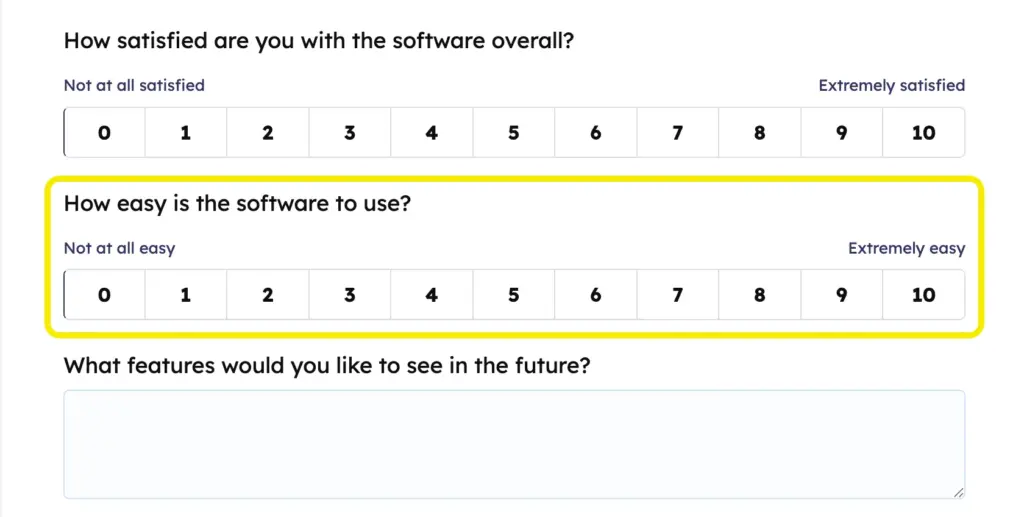
7. How easy is it to use our product/service?
Usability kills more products than missing features.
If something’s hard to use, people stop using it. They don’t file bug reports-they just leave. A simple ease-of-use rating catches friction before it costs you customers.
A software survey form can ask this question to make their product more accessible to the users.
Best for: UX evaluation, identifying onboarding issues.
8. What are your favorite features/services?
Similar to question 5, but more specific.
This tells you which features drive actual value. Useful for prioritizing development resources and knowing what absolutely cannot break in your next update.
In a product survey form it can be the most relevant question to ask, and users will definitely answer as they want to keep using those features or services regularly.

Best for: Product development decisions, feature prioritization.
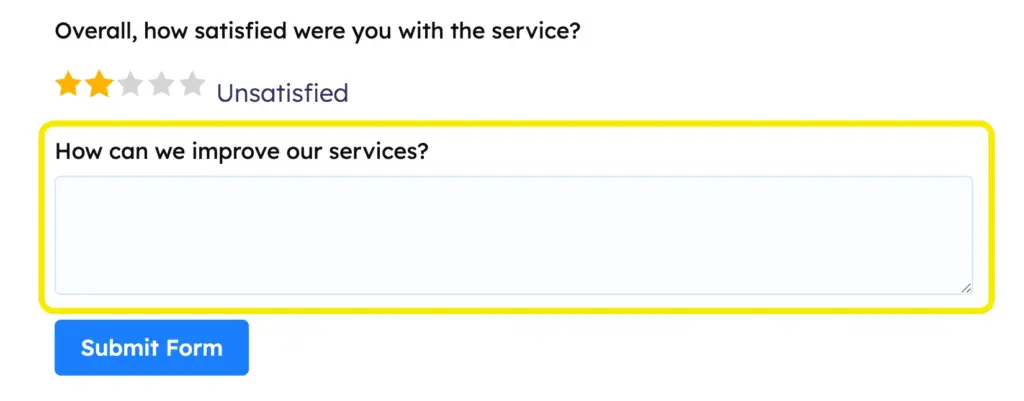
9. What can we do to improve your experience?
Open invitation for suggestions.
Customers often have ideas you haven’t considered. They’re using your product in ways you didn’t anticipate, solving problems you didn’t know existed. Tap into that knowledge.
In a cancellation survey, it’s a question you must ask, as you will get an idea why users are not using your product/service. It can also be asked in any other type of customer surveys.
Best for: Generating improvement ideas, showing customers you’re listening.
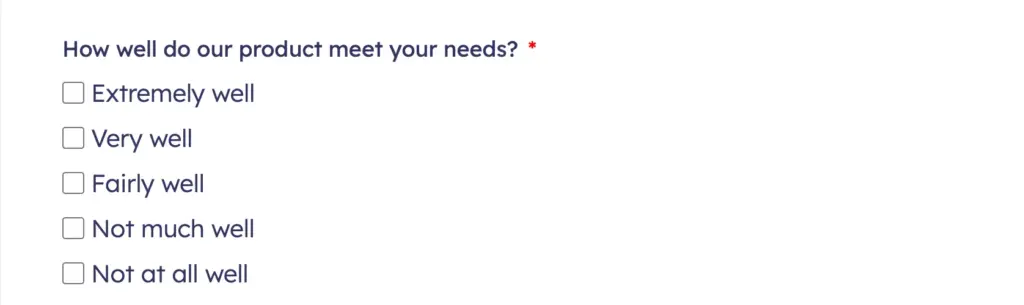
10. How well does our product/service meet your needs?
Expectations vs. reality check.
This reveals the gap between what customers wanted and what they got. A high satisfaction score with a low “meets needs” score means you’re delighting people who shouldn’t have bought from you in the first place-a marketing problem, not a product problem.
In a simple customer satisfaction survey, you can gather this impression and use it for development.
Best for: Product-market fit assessment, refining target audience
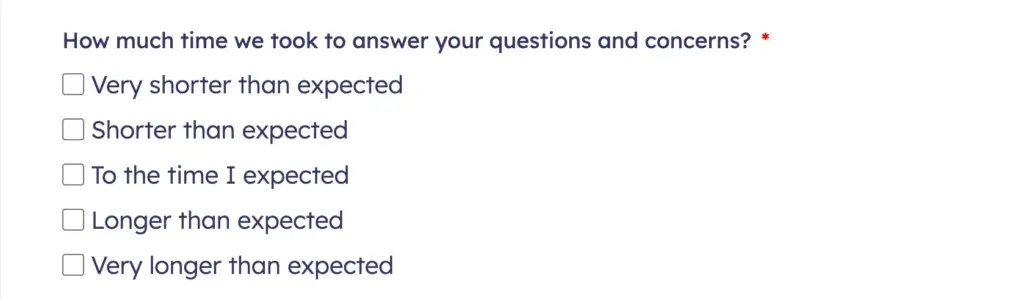
11. How responsive have we been to your questions or concerns?
Speed matters. This measures it.
In a world of instant everything, response time shapes customer perception. Even if you can’t solve a problem immediately, acknowledging it quickly builds trust.
It is a valuable question in a customer service survey, to get scores on your response time, and optimize your services for a faster response time.
Best for: Support SLA evaluation, measuring communication effectiveness.
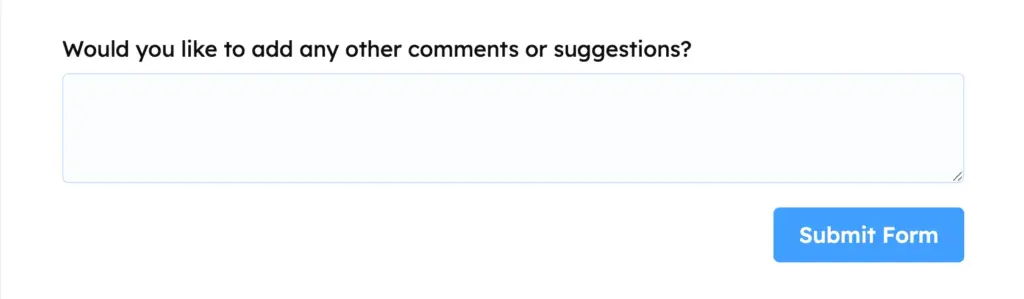
12. Would you like to add any other comments or suggestions?
The catch-all. Put it near the end.
Some customers have things to say that don’t fit your other questions. Give them space. You’ll get noise, but you’ll also get insights that surprise you.
You can rephrase this question and use it in other surveys, for example: a market research survey.
Best for: Capturing unexpected feedback, letting customers feel heard.
13. How would you rate the value for money of our product/service?
Price sensitivity check.
High satisfaction + low value perception = price is too high. Low satisfaction + high value perception = you’re undercharging and underdelivering. This helps you calibrate.

Best for: Pricing strategy, understanding perceived value
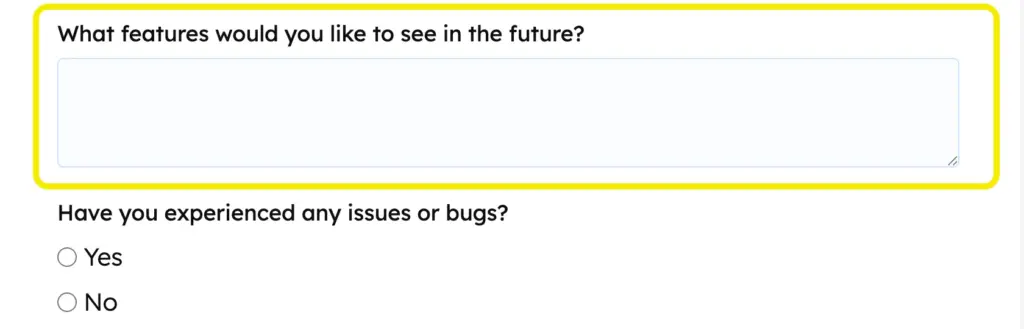
14. What feature/service would you like to see next?
Crowdsource your roadmap.
Customers will tell you exactly what they’re willing to pay for next. Pattern recognition here is key-when multiple customers ask for the same thing, you’ve found demand.
You can use it in any product satisfaction survey to get insights that help you compete in the market.
Best for: Product roadmap planning, feature validation.
Enjoying this article?
We regularly publish actionable content on our blog. Subscribe to get them delivered straight to your inbox.
We won’t spam you. You can unsubscribe whenever you want.
Putting these questions to work
Don’t use all 14 in one survey. Pick 5-7 based on what you’re trying to learn. Long surveys get abandoned.
On our template page you can find the surveys in action – analyze how the questions are structured, in which manner they are asked and modify them according to your context.
Using Fluent Forms you can create any type of customer surveys you want. The radio, checkboxes, nps, and ratings fields along with 65+ input fields, help you build – surveys, quizzes, conversational forms, login/registration forms and a lot more.
Mix question types: a few rating scales for quantitative data, a few open-ended for context. The scales show you what’s happening; the open-ended questions show you why.
Send surveys at the right moment-right after a purchase, after a support interaction, or at regular intervals for ongoing relationships.
Most importantly: act on what you learn. A survey that collects dust is worse than no survey at all. It trains customers to ignore you.

This is Sumit. He’s a physics major who’s trying to understand both the physical as well as the WordPress worlds. Whenever he’s not busy, plays fifa or spends time with his family.



Leave a Reply