

WordCamp Europe 2026 in Kraków: Everything You Need to Know
Dzień dobry – and welcome to the most complete guide to WordCamp Europe 2026.
The biggest WordPress event in Europe is heading to Kraków, Poland, this June, and there is a lot to be excited about. The full schedule is live. Matt Mullenweg is confirmed as the closing keynote speaker. WordPress 7.0 – the most architecturally significant release in years – shipped just weeks before the doors open. And Kraków itself is one of the most beautiful, affordable, and welcoming cities in Central Europe.
Whether you’re a developer, designer, agency owner, marketer, or someone who has been on the fence about attending their first WordCamp, this guide covers everything: the event schedule, confirmed speakers, Contributor Day, what to eat, how to get around, where to stay, and why 2026 is a uniquely important year to be in the room.
WordCamp Europe 2026 at a Glance
|
Dates |
June 4–6, 2026 |
|
Contributor Day |
Thursday, June 4 |
|
Main Conference |
Friday–Saturday, June 5–6 |
|
Venue |
ICE Kraków Congress Centre |
|
City |
Kraków, Poland |
|
Expected Attendance |
3,000+ |
|
Sessions |
60+ sessions & workshops |
|
Ticket Price |
€50 (General admission) & €250 (Micro-Sponsor) |
|
Official Site |
europe.wordcamp.org/2026 |
Why WCEU 2026 is a Pivotal Moment for WordPress
WCEU 2026 is something different – it’s the community’s first gathering after a year of seismic change. Here’s why –
WordPress 7.0 is scheduled to be shipped two weeks before the event
WordPress 7.0, scheduled for release on May 20, 2026, just two weeks before WCEU opens, is the most architecturally significant version in years. The release was delayed from its original April 9 date to allow for additional testing of the new real-time collaboration features and ensure better stability. It ships with:
- Real-time collaborative editing – multiple users editing the same post simultaneously, with offline syncing built in
- AI Connectors in core – a centralized credential management system for OpenAI, Gemini, and Anthropic Claude, letting plugins build AI-powered features directly on the platform
- A new PHP 7.4 minimum – ending support for PHP 7.2 and 7.3, with direct consequences for anyone running older hosting environments
- A full admin visual refresh – new default color scheme, cleaner dashboard, smooth view transitions, and visual revision comparisons.
Kraków is where the WordPress community collectively processes what these changes mean in production. The people who built these features will be in the room. The agencies and freelancers running hundreds of WordPress sites will also be in the room. The conversations that happen in the hallways and between sessions at WCEU often shape the platform’s next development cycle more than any GitHub thread.
Matt Mullenweg delivers the closing keynote on June 6
The co-founder of WordPress and CEO of Automattic is confirmed as the closing speaker on the final evening. At every WCEU, Mullenweg’s address functions as the most direct public signal of where WordPress is heading for the next year. In Basel 2025, it shaped the formation of the WordPress AI team and set the agenda for what would eventually ship in WordPress 7.0.
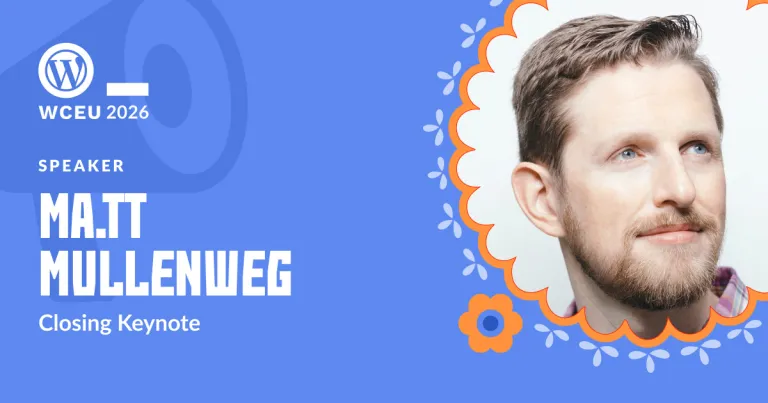
In Kraków, with AI connectors freshly live in core and real-time collaboration now a platform feature, the keynote will address what comes next. For anyone whose work depends on WordPress, it’s the most information-dense 60 minutes of the year.
The AI story that started in Basel comes to Kraków
At WCEU 2025, the WordPress project formally established a dedicated AI team. In the twelve months since, that team’s work has shipped into core. Kraków is where the community assesses what has actually been built, what works, what doesn’t, and where the platform goes next with AI-native tools.
Sessions across both conference days cover AI, accessibility, business strategy, developer tools, and community – with speakers coming from around the world.
Schedule: What Happens Each Day
June 4 – Contributor Day
Contributor Day is a full day dedicated to working on WordPress – not just talking about it. Teams form around every part of the project, and you join whichever one matches your skills and interests. You can switch tables at any time. There are mentors and onboarding guides for first-timers.
You absolutely do not need to be a developer to contribute. Some of the most impactful contributions happen in documentation, translation, photography, support, training, marketing, and community organising.
June 5 – Conference Day 1
The main conference kicks off with talks and workshops across multiple simultaneous tracks. Sessions on June 5 cover WordPress development, AI integration, accessibility, business, marketing, education, and community. Formats range from 10-minute lightning talks to 30-minute deep dives, giving you flexibility to move between rooms and tracks throughout the day.
June 6 – Conference Day 2 + Closing Keynote + After Party
The second conference day follows the same multi-track format. The evening closes with Matt Mullenweg’s keynote address, followed by the official after-party – open to all ticket holders – to celebrate three days of learning, building, and connecting.
The full session-by-session schedule is live at europe.wordcamp.org/2026/schedule/.
Confirmed Speakers at WCEU 2026
WCEU 2026 features speakers spanning 6 continents – developers, designers, marketers, accessibility advocates, community builders, and WordPress core contributors.
The full speaker profiles are at europe.wordcamp.org/2026/speakers/.
Tickets: How Much, What’s Included, Where to Buy
General admission ticket: €50
Includes access to both conference days (June 5–6), daily catered lunch, coffee, snacks, the opportunity to register for Contributor Day, the event t-shirt, and an invitation to the closing after-party on June 6. Contributor Day (June 4) requires a separate registration.
Micro-sponsor ticket: €250
If your budget allows, choosing a micro-sponsor ticket directly supports keeping general tickets affordable for the wider community. As a thank-you, micro-sponsors are featured on a dedicated page on the WCEU website with their name and a link of their choice.
Buy tickets: europe.wordcamp.org/2026/tickets/
The Venue: ICE Kraków Congress Centre
ICE Kraków Congress Centre is a purpose-built, modern congress centre that opened in 2014, sitting directly alongside the Vistula Boulevard – the riverside path locals use for running and cycling.
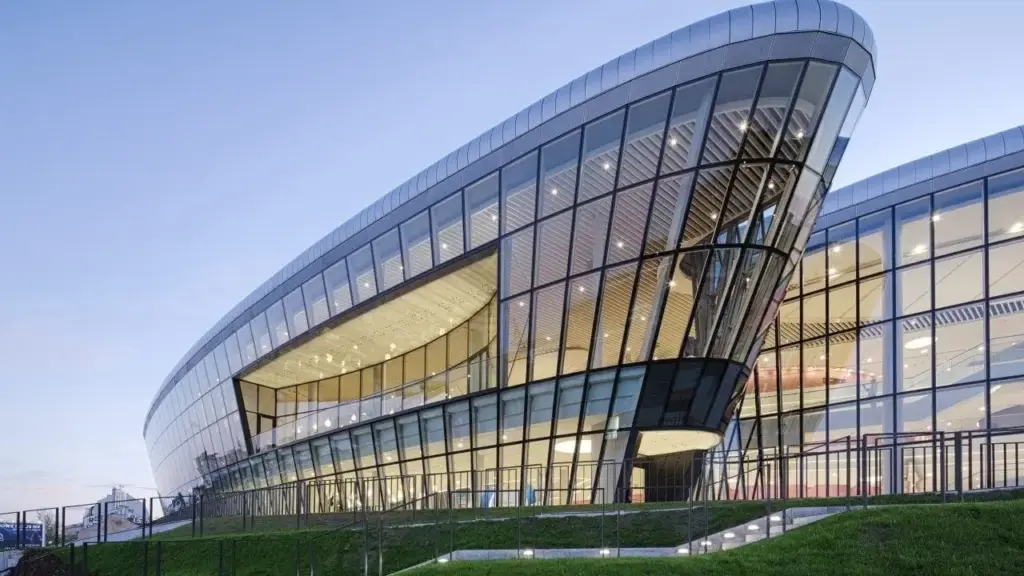
The main entrance faces Konopnickiej Street. Registration is on the ground floor atrium, where the attendee services team and volunteers will direct you from there.
The venue spans four levels (0–3) with dedicated rooms for talks, workshops, the sponsor hall, and networking. You can take a virtual walkthrough before you arrive.
Food at the venue: Catering is included in your ticket – daily lunch, unlimited coffee, water, and tea throughout both conference days. Żabka convenience stores are a short walk away for extra snacks.
Getting to Kraków
By air
John Paul II International Airport (KRK) is 11 km from the city centre and the easiest entry point. It connects to most major European hubs with direct flights. Budget travellers might find cheaper options to Katowice Airport, though you’ll add 1.5 hours for the bus transfer. Warsaw Chopin is another option, with trains to Kraków running approximately every hour and taking about 2.5 hours.
By train
Train travel to Kraków is straightforward and often scenic:
- From Warsaw: ~2.5 hours, from 39 PLN
- From Prague: ~7–8 hours
- From Vienna: ~6 hours
- From Berlin: ~8–10 hours
Kraków Główny (Main Station) is well-connected to trams, and the city centre is walkable from there.
Getting Around Kraków
Once you have your WordCamp badge, all public transport in Kraków is free. This applies to trams and buses for the full duration of the event.
Trams to the venue
Lines 8, 13, 24, and 73 stop at “ICE Kraków” directly in front of the venue.
- From Main Train Station: Tram 8 or 13 south (~10 minutes)
- From Kazimierz: Tram 24 (~5–7 minutes)
- From the Old Town on foot: 15–20 minutes along the Vistula riverside path
Trams run from 5 AM to 11 PM. Night buses cover later hours.
Ride-hailing
Uber, Bolt, and FreeNow all operate in Kraków. From the Old Town to ICE Kraków: 15–20 PLN, ~25 PLN in heavy traffic. Always use apps – avoid unlicensed taxis at the airport or station.
Bikes and scooters
The Wavelo city bike system and Bolt/Lime electric scooters cover the city well. The riverside path connects the Old Town directly to ICE Kraków, completely avoiding traffic. Scooters cost ~1 PLN to unlock plus 0.50–1 PLN per minute.
Where to Stay in Kraków
Book as early as possible. June is peak tourist season in Kraków, and the WCEU weekend falls on a long weekend in Poland. Hotel availability shrinks quickly.
WCEU has partnered with several Kraków hotels to offer discounted rates for attendees. Check europe.wordcamp.org/2026/accommodation/ for the current list.
What to Eat in Kraków
Polish cuisine is hearty, flavourful, historically rich, and – crucially – very affordable. Here is what to seek out during your stay.
Must-try dishes
Pierogi – Poland’s beloved dumplings, filled with potato and cheese (ruskie), meat, mushrooms, and sauerkraut, or sweet fruit. Available everywhere, rarely disappointing.
Obwarzanek Krakowski – Kraków’s iconic braided ring bread, sold from blue street carts for 3–5 PLN. Sprinkled with poppy seeds, sesame, or coarse salt. It holds EU Protected Geographical Indication status – the same category as Champagne and Parmigiano-Reggiano. Buy one warm from a cart near the Main Square and eat it while walking. Medieval Cracovians did the same.
Żurek – A sour rye soup, often served inside a hollowed bread bowl, with hard-boiled egg and white sausage. Warm and deeply Polish.
Zapiekanka – Open-faced baguette with toppings, grilled and sold from the circular stalls at Plac Nowy in Kazimierz. The classic Kraków street food, about 10–15 PLN.
Bigos – Hunter’s stew of sauerkraut, fresh cabbage, and mixed meats. Smoky, rich, and best eaten in cold weather – though it’s available year-round.
Oscypek – Smoked sheep’s milk cheese from the Tatra Mountains, often grilled and served with cranberry jam.
Dietary notes
Vegetarian and vegan options are available at most modern restaurants in Kraków. Gluten-free requests are usually accommodated – ask for bez glutenu. Halal and kosher options are available in the Kazimierz area.
Things to Do in Kraków
Kraków’s historic centre is compact enough to explore largely on foot. Here are the highlights.
In the city
Entry prices below are current as of 2026 – check official sites before visiting, as they can change.
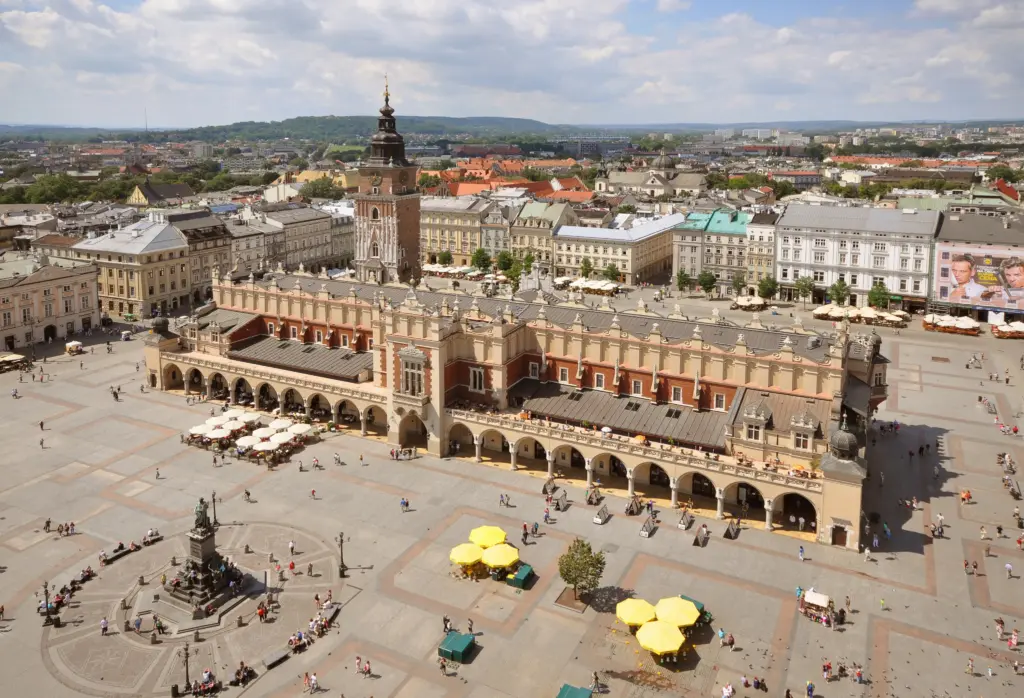
Main Market Square (Rynek Główny) – One of Europe’s largest and most beautiful medieval squares. Free to walk. Sit at a café terrace, watch the pigeons swirl, listen for the hourly bugle call from St. Mary’s Basilica tower (a tradition unbroken since the Middle Ages).
Wawel Royal Castle – Former home of Polish kings, overlooking the Vistula from a limestone hill. Spectacular. Entry varies (30–450 PLN depending on sections). Book online to skip queues.
Kazimierz – The old Jewish quarter, now the city’s bohemian neighbourhood. Free to wander. Best explored on foot in the early evening when the bars and restaurants come alive.
Wawel Dragon’s Cave – The real limestone cave from the city’s founding legend. A bronze dragon by Bronisław Chromy (1972) stands at the riverside exit and breathes actual fire every few minutes. Worth it for the theatre alone.
Schindler’s Factory – The museum documenting Kraków under German occupation in WWII. 40 PLN entry; book online.
St. Mary’s Basilica – A Gothic masterpiece on the Main Square. The carved altarpiece by Veit Stoss is one of the finest works of Gothic sculpture in Europe. Entry 10–18 PLN.
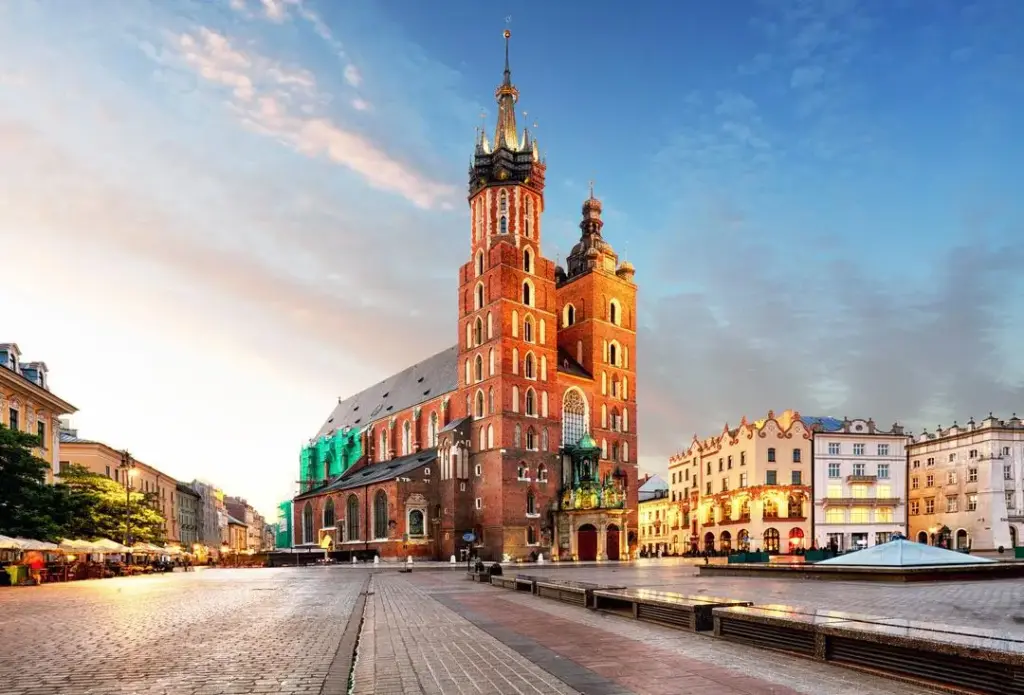
Planty Park – A ring of green parkland following the line of Kraków’s former medieval city walls. Free, quiet, and lovely for a walk between sessions.
Day trips
Wieliczka Salt Mine (30 min) – Underground chambers, chapels, and sculptures carved entirely from salt over seven centuries. Entry 103 PLN.
Auschwitz-Birkenau (1.5 hours) – The former German Nazi concentration and extermination camp, now a UNESCO World Heritage Site and memorial. Entry free; guided tours ~130 PLN.
Zakopane and the Tatra Mountains (2 hours) – Hiking, mountain views, and traditional Polish highlander culture. A full day’s trip.
Practical Tips for Your Visit
Currency
Poland uses the Polish złoty (PLN), not the euro. Current rates: approximately 4.3 PLN per euro, 3.6 PLN per US dollar. Exchange money at city-centre kantors (exchange bureaus) rather than at the airport for meaningfully better rates. ATMs are everywhere. Visa, Mastercard, Apple Pay, and Google Pay are accepted at almost all businesses; keep a small amount of cash for street vendors and markets.
The cost advantage is real. A good restaurant dinner that costs €35–40 in Western Europe is likely €12–18 in Kraków. Your budget will go further here than at any recent WCEU host city.
Weather in June
Expect warm, sunny days: 22–26°C (72–79°F) on average, with long evenings (sunset well after 9 PM). Pack light layers, a compact rain jacket for occasional afternoon thunderstorms, and – critically – comfortable walking shoes. Kraków’s historic centre is cobblestone, and it is gorgeous but unforgiving on the feet. Sunscreen and a hat are worth the bag space.
Language
Polish is the official language, but English is widely spoken in tourist areas, at all conference-facing venues, and by most people under 40. A few phrases will earn you genuine warmth:
- Hello: Cześć (cheshch)
- Thank you: Dziękuję (jen-koo-yeh)
- Please: Proszę (pro-sheh)
- Excuse me: Przepraszam (pshe-pra-sham)
- Cheers: Na zdrowie! (na zdro-vyeh)
Safety
Kraków is a very safe city. The main risk is standard pickpocketing in crowded tourist spots – Main Square, trams, and Kazimierz on busy evenings. Normal awareness is sufficient. Emergency number: 112 (English-speaking operators available).
Connectivity
Tourist SIM cards available at the airport from Play, Orange, or T-Mobile: ~30–40 PLN for 10 GB of data plus EU calls. eSIM options include Airalo and Holafly, purchasable before you travel. Free WiFi at most cafés, restaurants, and the Main Square.
Power: European two-pin plugs, 230V.
A Note from Fluent Forms
At Fluent Forms, the WordPress community is at the core of everything we do. We build for WordPress users – developers, agencies, small businesses, nonprofits – and events like WordCamp Europe are a direct reminder of who that community is and why it matters.
If you’re heading to Kraków and using WordPress to power client sites, event registrations, contact forms, or lead capture pages, we’d love to connect. Fluent Forms powers 700,000+ WordPress sites with fast, flexible forms for exactly these use cases – from simple contact forms to multi-step conditional workflows and payment-integrated pipelines.
Browse our form templates – you might find something worth showing a client in Kraków.
See You in Kraków
WordCamp Europe has been one of the most consistent highlights of the WordPress calendar for over a decade – a place where the community that builds, maintains, designs for, and grows on WordPress comes together in person. In Porto, Athens, Torino, and Basel, it has shaped conversations that echoed through the platform for years.
Kraków 2026 arrives at a genuinely interesting moment: a major platform release behind us, an AI team putting its first year of work on display, and a closing keynote from the person who started the whole thing. Whatever the sessions cover, the conversations between them are often where the most useful things happen.
Do zobaczenia w Krakowie – see you in Kraków.

An Econ major turned into a Digital Marketer by choice. Hello! This is Ashraf and I am here to enlighten you on various WordPress topics and help you make informed decisions.


Leave a Reply